Why More Gear Manufacturers Are Upgrading from Conventional to CNC Hobbing Machines
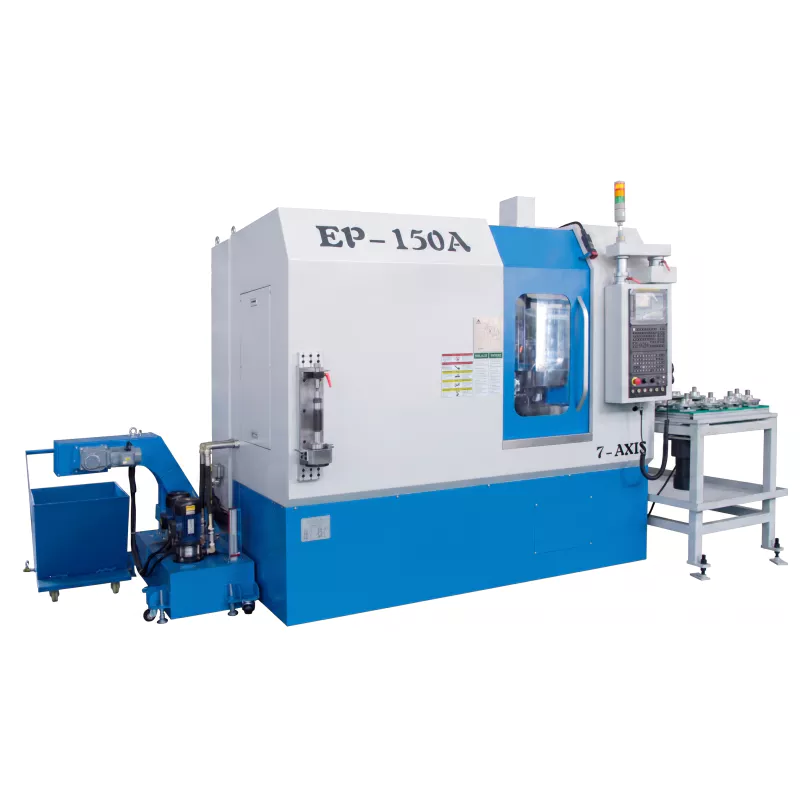
Across the global gear manufacturing industry, there is a clear and accelerating trend: shops that once relied on conventional (mechanical) hobbing machines are upgrading to CNC hobbing machines at an unprecedented rate. Whether driven by customer quality demands, the need to reduce setup time, or simply the desire to compete in a market where cycle times and repeatability have become table stakes, the shift from mechanical to CNC hobbing is reshaping the gear manufacturing landscape.
This guide examines the key drivers behind this upgrade wave — and why the decision to upgrade, once delayed, almost always ends with a question of “why didn’t we do this sooner?”
The Limitations of Conventional Hobbing Machines
Conventional (mechanical) hobbing machines were engineering marvels of their era — and many are still running in shops worldwide. But they carry fundamental limitations that become increasingly costly as markets evolve:
Mechanical Change Gears
Changing from one gear specification to another requires swapping out multiple change gears — a process that can take 2–4 hours. In an era of short-run, mixed-model production, this is a production-killing bottleneck.
Accumulated Mechanical Error
Gear trains and change gear sets accumulate backlash and wear over time. This manifests as pitch error in the finished gear — getting progressively worse as the machine ages without major overhaul.
No Automation Capability
Conventional hobbers have no standardized interfaces for robot loading, data output, or production monitoring — leaving them permanently dependent on manual operation and unable to participate in Industry 4.0 production environments.
Limited Process Capability
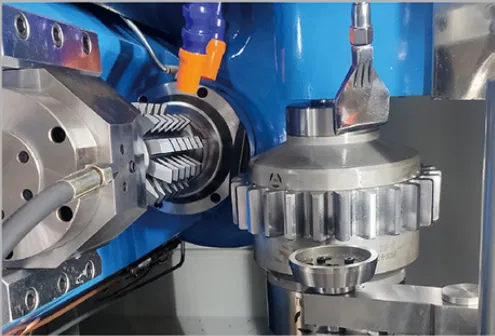
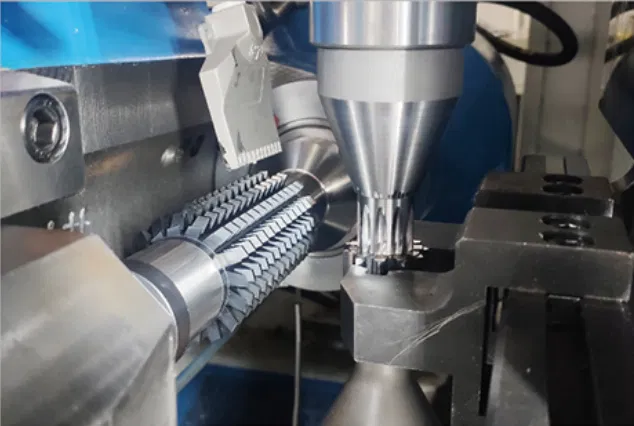
Conventional machines cannot perform automatic hob shift, diagonal hobbing, crowned tooth generation, or variable-lead cutting — capabilities that are standard on modern CNC hobbers and required for many precision gear applications.
What CNC Hobbing Machines Deliver That Conventional Machines Cannot
📈 Instant Job Changeover
CNC program recall changes all axis parameters in seconds. What took 2–4 hours of change gear swapping on a conventional machine takes 5–15 minutes on a CNC hobber — just select the program, verify the hob, and start cutting. For job shops producing many different gear types in small batches, this alone justifies the upgrade.
🔍 Better and More Consistent Gear Quality
Electronic gearing maintains the hob-to-workpiece synchronization ratio with zero mechanical accumulation error — permanently and consistently. A new CNC hobber produces the same gear quality on day one as on day 3,650 of its service life, assuming proper maintenance. A conventional machine degrades gradually as mechanical components wear.
⚡ Higher Productivity
CNC hobbing machines are designed for higher cutting speeds, optimized approach/retract sequences, and automatic hob shift — all of which reduce cycle time and increase gears-per-hour compared to a conventional machine running the same cut. The productivity advantage is typically 30–80% in direct cycle time comparison.
🤖 Automation Capability
A CNC hobbing machine can be integrated with a robot or gantry loader to run lights-out. No conventional machine can match this capability. In markets where labor costs are rising and skilled operators are scarce, this capability is increasingly a competitive necessity rather than a luxury.
📈 Data and Traceability
Modern CNC hobbing machines log every machining cycle — part count, cycle time, spindle load, alarm history. This data supports SPC, predictive maintenance, and quality traceability requirements of automotive and aerospace customers. A conventional machine produces no digital data at all.
The Economics of Upgrading
| Factor | Conventional Machine (Aging) | New CNC Hobbing Machine |
|---|---|---|
| Changeover time | 2–4 hours | 5–15 minutes |
| Gear accuracy | DIN 7–9 (degraded) | DIN 5–6 (consistent) |
| Labor requirement | Constant operator attendance | Reduced; automation-capable |
| Maintenance cost | Rising (aging mechanical systems) | Predictable (PM schedule) |
| Customer approvals | At risk from quality levels | Meets modern automotive/industrial requirements |
Is It Time to Upgrade Your Hobbing Machine?
If any of the following describe your situation, the upgrade conversation is overdue:
- ● Changeover time limits your ability to accept small-batch orders profitably
- ● Customers are requesting quality documentation you cannot generate from conventional machines
- ● Aging machine maintenance is consuming disproportionate maintenance budget and downtime
- ● Competitor delivery times are shorter than yours — potentially because they can changeover faster
- ● You are losing work that requires DIN 6 or better gear quality
Our CNC Hobbing Machine — The Right Upgrade
Our CNC Hobbing Machine is the right upgrade choice for gear manufacturers stepping up from conventional equipment. Competitive pricing, proven reliability, FANUC/Siemens CNC platforms, and comprehensive after-sales support make the transition straightforward and profitable.
👉 Explore CNC Hobbing Machine Upgrade Options →
👉 Talk to Our Upgrade Specialists →