Large Module Gear Hobbing: CNC Machine Requirements for Heavy-Duty Applications
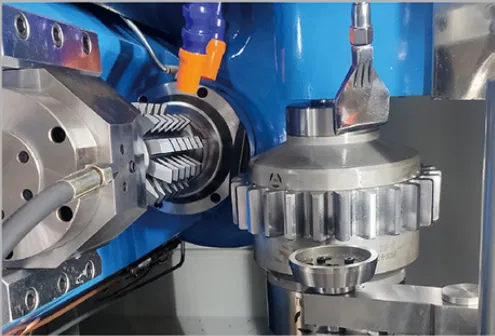
When module numbers climb above 8, 12, or even 20, gear hobbing enters a different league of engineering challenge. Large module gear hobbing is not simply a scaled-up version of small gear production — it demands machines with fundamentally different specifications in terms of power, rigidity, workpiece support, and hob system design. This guide defines what “large module” means in practice, why it demands special machine capability, and what CNC hobbing machine specifications to look for.
Defining Large Module Gear Hobbing
In the gear industry, module (m) is the metric measure of tooth size — the ratio of pitch diameter to number of teeth. As module increases, gear teeth become proportionally larger in all dimensions:
| Module Range | Classification | Typical Application | Tooth Depth (m×2.25) |
|---|---|---|---|
| m 0.5–3 | Fine/small | Instruments, automotive, pumps | 1.1–6.75 mm |
| m 3–8 | Medium | Industrial gearboxes, agriculture | 6.75–18 mm |
| m 8–20 | Large | Wind turbines, marine, mining | 18–45 mm |
| m 20–50+ | Very large | Mill girth gears, large marine | 45–112+ mm |
Why Large Module Hobbing Demands Special Machine Capability
Much Higher Cutting Forces
Chip cross-section area is proportional to module squared. An m16 cut generates roughly 25× the chip load of an m3 cut at the same feed rate — requiring proportionally more spindle power and structural rigidity.
Large, Heavy Workpieces
Large module gears are also large diameter gears. A module-16 wind turbine ring gear might be 2 meters in diameter and weigh 3–5 tonnes — requiring a machine bed, worktable, and tailstock designed to support this weight without distortion.
Large Hob Dimensions
Hobs for large modules are themselves large — module-20 hobs may be 200 mm or more in diameter and weigh 10–30 kg. The hob spindle must accommodate large arbors with sufficient rigidity to prevent hob deflection during cutting.
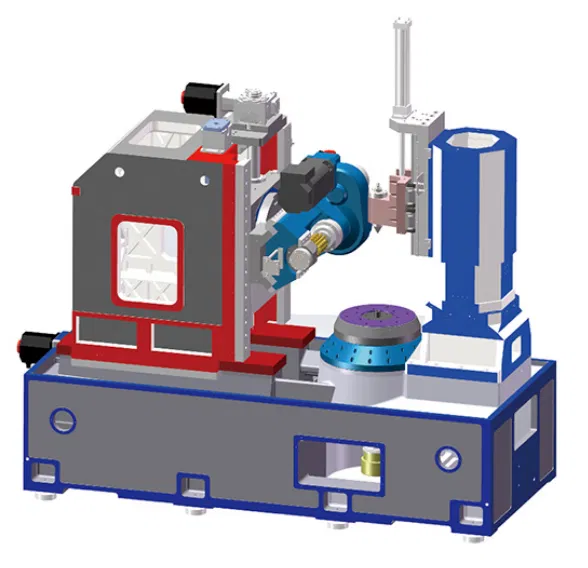
CNC Machine Specifications for Large Module Hobbing
| Specification | m8–16 Range | m16–30 Range | m30+ Range |
|---|---|---|---|
| Hob spindle power | 30–55 kW | 55–90 kW | 90–150+ kW |
| Max workpiece dia. | 800–1500 mm | 1500–3000 mm | 3000–8000 mm |
| Max face width | 400–600 mm | 600–900 mm | 800–1500 mm |
| Machine weight | 20–50 t | 50–120 t | 120–500+ t |
Process Considerations for Large Module Hobbing
⚙ Multiple Roughing Passes
For large module gears, it is impractical to take full tooth depth in a single pass. Standard practice is 2–4 roughing passes at increasing depth, followed by a final finish pass. This manages chip load, heat generation, and tool wear while maintaining gear quality.
⚙ HSS Hobs (Wet Hobbing Standard)
For large modules (m>10), HSS or PM-HSS hobs with flood cutting oil are the dominant choice. Carbide hobs in large modules are prohibitively expensive and fragile. High-sulfurized or EP (Extreme Pressure) cutting oil is recommended for the high-pressure conditions in large module hobbing.
⚙ Workpiece Support
Large workpieces on horizontal machines require tailstock support to prevent deflection during cutting. The tailstock live center must be aligned precisely to the workpiece spindle axis. On very large machines, steady rests (lunettes) may be required to support the workpiece at intermediate points along its length.
⚙ Crown Hobbing for Large Gears
Large gears in wind turbines and industrial gearboxes almost universally incorporate tooth crowning to distribute load evenly across the face width under shaft deflection. CNC hobbing machines with 6-axis capability can apply crowning directly in the hobbing operation, avoiding the need for grinding or additional crowning operations.
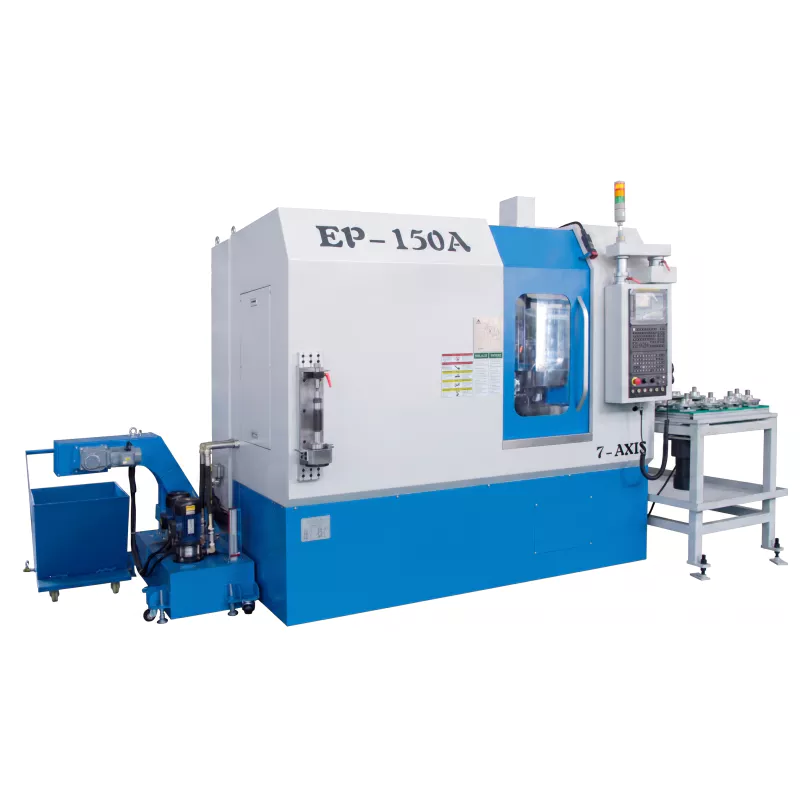
Our CNC Hobbing Machine for Large Module Gears
Our CNC Hobbing Machine is available in large-capacity configurations with the spindle power, rigid bed construction, and large workpiece support systems required for heavy-duty large module gear production.
👉 View Large Module CNC Hobbing Machine →
👉 Discuss Your Large Gear Hobbing Requirements →