Electric Vehicle Gearboxes and the Rising Demand for CNC Hobbing Precision
The global transition to electric vehicles (EVs) is reshaping gear manufacturing in profound ways. While a conventional combustion engine vehicle contains hundreds of gears across its engine, transmission, and drivetrain, an EV drivetrain is simpler — but demands far higher gear quality. The absence of engine noise means gear mesh noise travels directly to the occupant; there is no masking. The result is an unprecedented demand for ultra-precise CNC hobbing capable of meeting the tighter accuracy and surface quality requirements that EV gearbox gears demand.
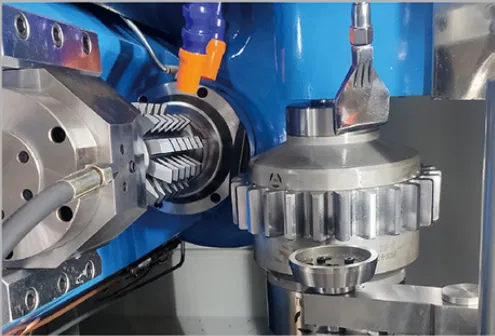
How EV Drivetrains Differ From ICE Gearboxes
| Characteristic | ICE Transmission | EV Gearbox |
|---|---|---|
| Number of gear ratios | 6–10 forward speeds | 1–2 speed single reduction |
| Gear types | Many gear sets, synchronizers | One or two helical gear pairs |
| Speed range | Crankshaft: 600–7000 RPM | Motor: 0–20,000+ RPM |
| Background noise | Engine vibration masks gear noise | Near-silent — gear noise fully audible |
| Gear accuracy requirement | DIN 5–7 (hobbed + ground) | DIN 4–5 (hobbed + fine-ground) |
| NVH testing | Standard transmission noise testing | 100% TE (transmission error) testing |
What EV Gear Requirements Mean for CNC Hobbing
The shift to EV gear production is driving several changes in how CNC hobbing is specified and operated:
Tighter Pre-Grind Quality
EV gears are typically ground after hobbing. The tighter the hobbed quality, the less grinding stock is needed — and the lower the risk that grinding introduces thermal damage (burns) trying to remove too much stock. CNC hobbing quality targets for EV gears: DIN 5–6 pre-grind.
Crowned Tooth Profile
EV transmission gears almost universally use tooth crowning (barreling) to reduce edge loading and noise from shaft misalignment. 6-axis CNC hobbing machines can pre-crown the tooth form in the hobbing operation, reducing the crowning work in subsequent grinding.
Surface Finish
Smoother hobbed surface finish means less material removed in grinding and a better final flank texture. Optimized axial feed, climb hobbing, and coated carbide hobs combine to achieve Ra 0.8–1.6 µm directly from hobbing.
Higher Volume
EV production volumes are growing rapidly. The combination of high quality requirements and high volume demands the most productive, most precise CNC hobbing capability — 5-axis or 6-axis machines with dry hobbing capability and full automation.
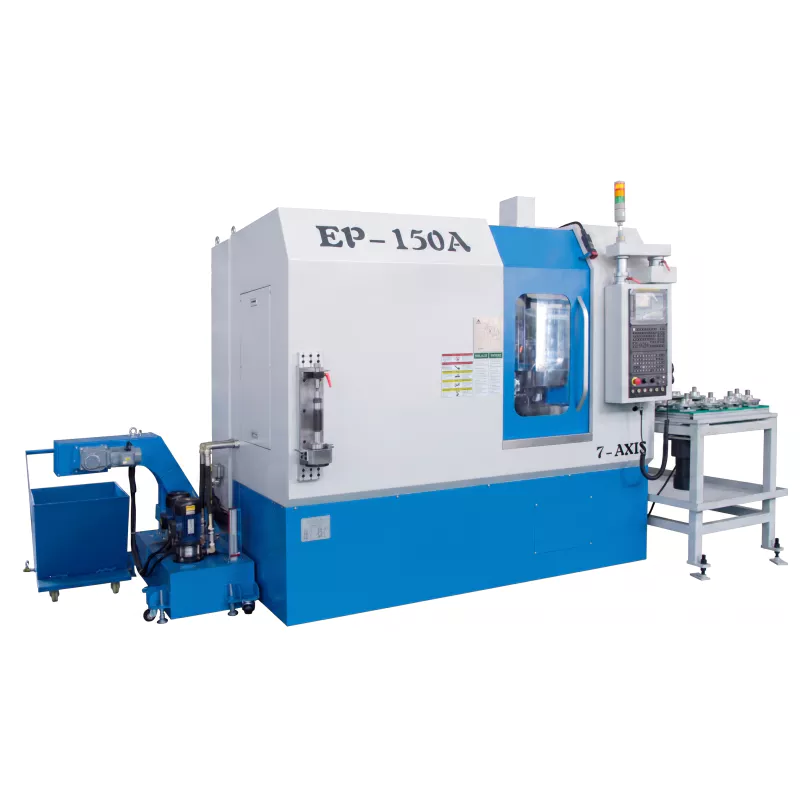
The EV Hobbing Process Chain
- CNC Turning — Gear blank preparation to tight bore and face tolerances
- CNC Hobbing (5–6 axis) — Soft-cut helical gear with pre-crown; DIN 5–6 pre-grind quality; Ra 0.8–1.6 µm
- Chamfering/Deburring — Inline deburring of gear edges
- Case Hardening (Carburizing + Quenching) — Surface case depth 0.5–1.0 mm; core: 25–35 HRC; case: 58–62 HRC
- Precision Gear Grinding — Corrects heat treatment distortion; final accuracy DIN 4–5; Ra 0.4–0.8 µm
- Transmission Error (TE) Testing — 100% acoustic quality check in meshing test rig
The Growing EV Gear Market
The global EV market is projected to grow dramatically through 2030 and beyond. Every EV sold requires a precision gear set — and unlike ICE vehicles, EV gear sets are held to a quality standard that only the finest CNC hobbing combined with precision gear grinding can achieve. Gear manufacturers who invest in 5-axis and 6-axis CNC hobbing capability now are positioning themselves to capture this rapidly growing market.
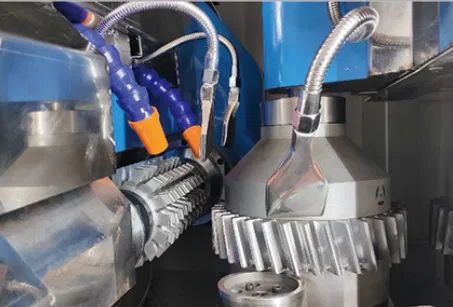
Our CNC Hobbing Machine for EV Gear Production
Our CNC Hobbing Machine is available in 5-axis and 6-axis configurations optimized for EV gear production — with precision spindles, automatic hob shift, crowned tooth capability, and dry hobbing at high cutting speeds. It is the right foundation for a competitive EV gear production line.
👉 View EV-Ready CNC Hobbing Machine →
👉 Discuss EV Gear Production Requirements →