The Role of CNC Control in Modern Hobbing Machines: Accuracy, Speed & Repeatability
The transformation of gear hobbing from a semi-skilled manual operation to a highly automated, high-precision manufacturing process is almost entirely attributable to one technology: CNC (Computer Numerical Control). Understanding what the CNC system actually does inside a modern hobbing machine — and why it matters for gear quality, production speed, and batch-to-batch consistency — is essential for anyone specifying or operating this class of equipment.
What Does the CNC System Actually Control?
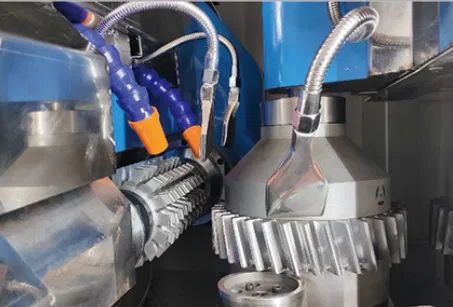
In a CNC hobbing machine, the controller is responsible for coordinating every motion that occurs during the gear cutting cycle. This includes:
- ● Electronic gearing: Maintaining the exact ratio between hob spindle (B-axis) and workpiece spindle (C-axis) to generate the correct number of teeth.
- ● Axial feed (Z-axis): Moving the hob smoothly across the gear face at the programmed feed rate while simultaneously maintaining the B/C synchronization.
- ● Radial positioning (X-axis): Controlling the center distance between hob and workpiece with sub-micron precision.
- ● Hob head swivel (A-axis): Positioning the hob at the exact swivel angle for the gear helix angle.
- ● Hob shift (Y-axis): Executing automatic tangential shift according to the programmed shift strategy.
- ● Approach and retract sequences: Executing safe, optimized paths that minimize non-cutting time while protecting the hob and workpiece.
How CNC Delivers Accuracy
Closed-Loop Feedback
Linear and rotary encoders continuously report actual axis position back to the controller. Any deviation from the commanded position is corrected in real time — typically within microseconds.
Thermal Compensation
Temperature sensors monitor the machine structure and spindle bearings. The CNC applies real-time offset corrections to counteract thermal expansion — preventing the accuracy drift that occurs as the machine warms up during a production shift.
Pitch Error Compensation
High-end CNC systems allow the user to input a measured pitch error table and automatically apply compensating motions during cutting — effectively correcting for leadscrew or axis errors that cannot be eliminated mechanically.
How CNC Delivers Speed
⚡ Optimized Approach and Retract
The CNC controls the hob’s approach to the workpiece at maximum safe speed, then decelerates to the programmed cutting feed at exactly the right moment. This minimizes non-cutting time without risking hob or workpiece damage on approach.
⚡ Look-Ahead Processing
Modern CNC systems pre-read hundreds of program blocks ahead of the current execution point. This enables smooth velocity profiles around direction changes — eliminating the hesitations and decelerations that waste cycle time in older controllers.
⚡ Adaptive Feed Control
Some advanced CNC hobbing machines incorporate spindle load monitoring. If cutting forces exceed a threshold (for example, at the approach point where the hob first contacts a hardspot in the workpiece), the feed rate is automatically reduced to protect the hob — then accelerated back to nominal when the load normalizes.
How CNC Delivers Repeatability
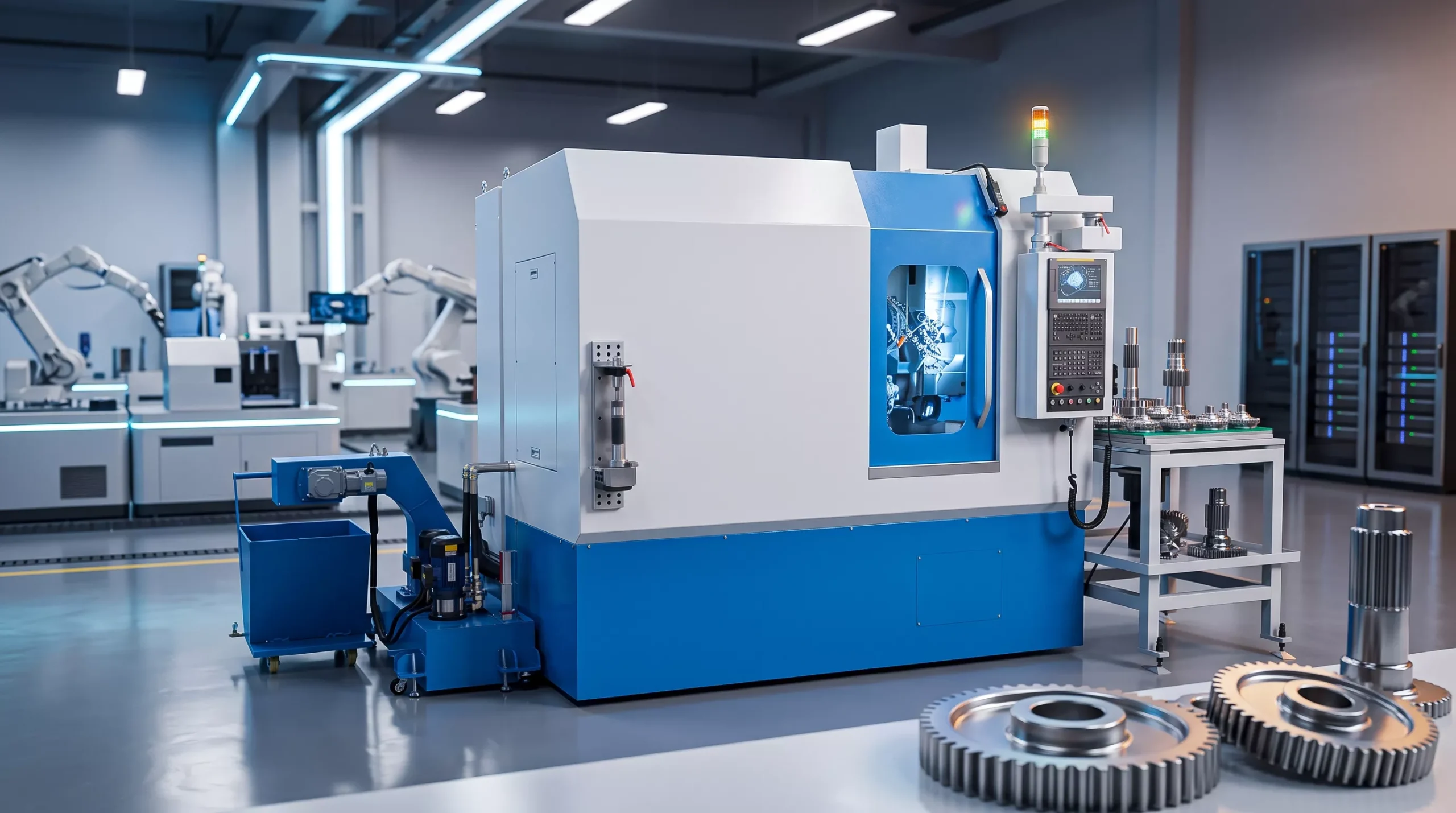
Repeatability — the ability to produce the same gear geometry batch after batch — is one of the greatest strengths of CNC hobbing:
| Feature | How It Improves Repeatability |
|---|---|
| Stored CNC programs | Eliminate human parameter error on job changeover; all settings recalled from memory |
| Servo drives vs. mechanical gearboxes | No wear-induced backlash growth over time; electronic ratio is always exact |
| Automatic hob shift strategy | Consistent tool wear distribution ensures gear quality does not degrade as hob wears |
| In-process probing (optional) | Closed-loop correction of deviations in the same setup; catches drift before scrap is produced |
Major CNC Platforms Used in Hobbing Machines
- ● FANUC Series 30i/31i/32i: Industry-standard platform; extensive hobbing-specific functions; large installed base of trained operators.
- ● Siemens SINUMERIK 840D sl: Widely used in European hobbing machines; powerful synchronous axis functions ideal for electronic gearing.
- ● Mitsubishi M800 series: Growing adoption in Asian hobbing machine OEMs; competitive performance and cost.
- ● Proprietary controllers: Some hobbing machine manufacturers develop their own HMI layer on top of a standard motion controller platform, with gear-specific programming wizards and diagnostics.
Our CNC Hobbing Machine
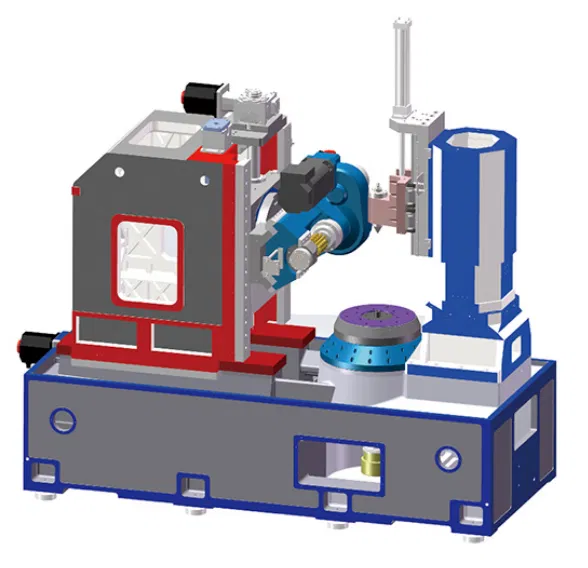
Our CNC Hobbing Machine is equipped with a high-performance CNC system featuring precision electronic gearing, multi-axis servo drives, automatic hob shift, and full program storage capability. It delivers the accuracy, speed, and repeatability that demanding gear production requires.
👉 View CNC Hobbing Machine Details →
👉 Request a Technical Data Sheet →