Hobbing Plastic and Non-Metallic Gears on CNC Machines: A Practical Guide
While the majority of gear hobbing applications involve steel and metal alloys, there is a significant and growing market for plastic and non-metallic gears produced by CNC hobbing. Plastic gears offer advantages including lightweight, self-lubrication, corrosion resistance, low noise, and low cost — making them attractive for medical devices, office equipment, consumer electronics, food processing machinery, and light-duty power transmission applications. Hobbing is often the most economical high-volume production method for precision plastic gears.
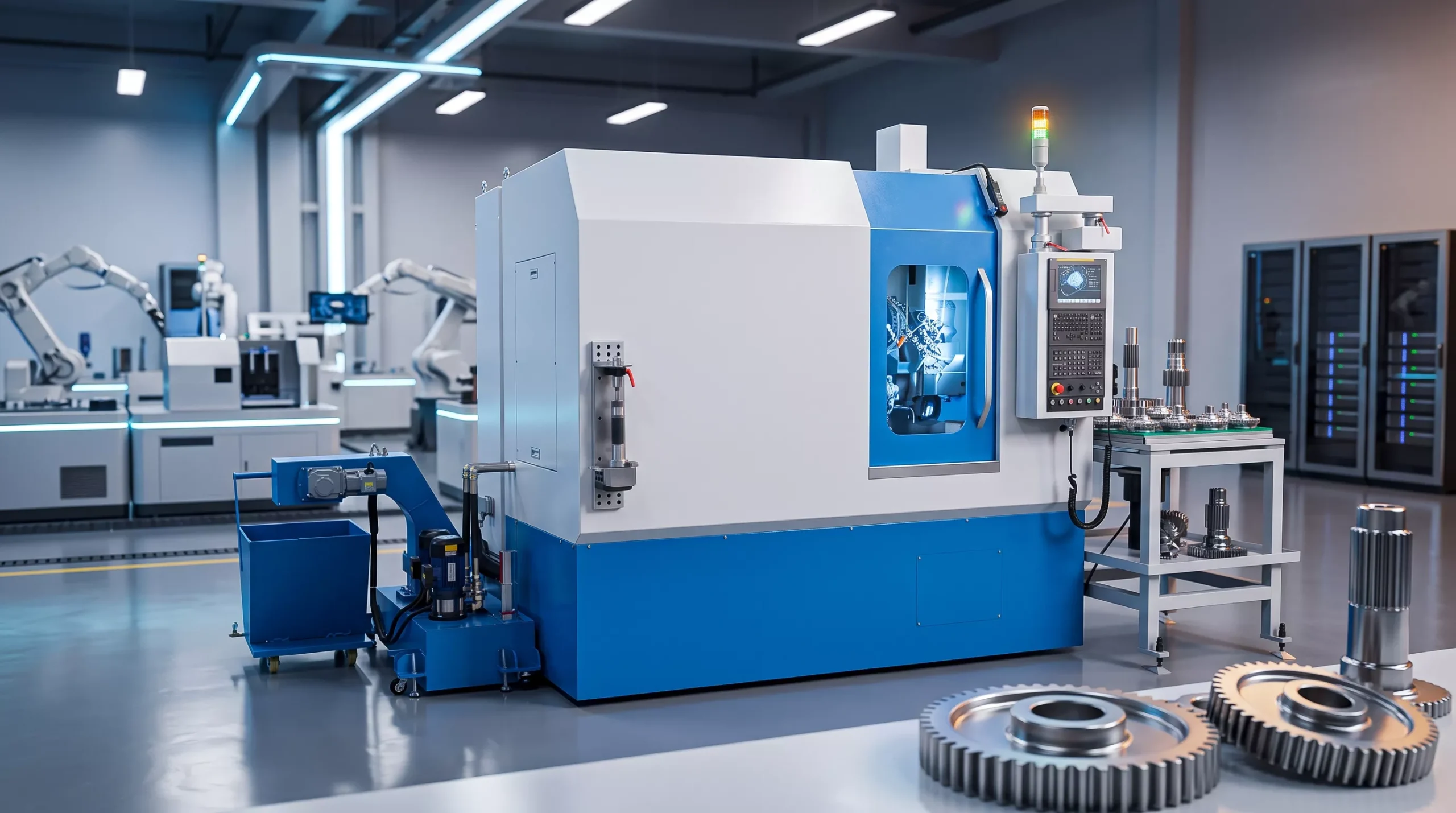
Why Hob Plastic Gears?
Plastic gears can be produced by several methods — injection molding, stamping, and machining (hobbing, milling). Hobbing is preferred when:
- ● Small-to-medium production volumes where injection mold tooling cost is not justified
- ● High dimensional accuracy is required — hobbed plastic gears achieve tighter tolerances than molded gears (no mold shrinkage variation)
- ● Design flexibility — multiple gear variants can be hobbed from the same blank material without new molds
- ● Tight lead times — hobbing from bar stock or discs is faster to market than waiting for a new injection mold
Common Plastic and Non-Metallic Gear Materials
Most widely used gear plastic. Excellent machinability, low friction, good dimensional stability. Used in automotive, office equipment, consumer goods.
Good toughness and impact resistance. Self-lubricating when glass-filled. Absorbs moisture (affects dimensions). Common in low-load drive systems.
High-performance engineering plastic for elevated temperature and chemical-resistant applications. More difficult to machine than POM/PA. Used in aerospace, medical, and chemical processing gears.
Very low friction, chemically inert. Typically used in FDA-compliant food and pharmaceutical gears. Soft and prone to deformation during machining — requires careful fixturing.
Key Challenges in Hobbing Plastic Gears
⚠ Heat Generation and Melting
Plastics have low thermal conductivity and low melting points. Excessive cutting heat causes material to melt at the cutting edge rather than forming clean chips — producing a gummy, poor-quality tooth surface. Solution: high cutting speed with sharp, lightly coated or uncoated hobs; air blast or minimal coolant to remove heat.
⚠ Workpiece Deflection and Fixturing
Plastics are much softer than metals. Excessive clamping force deforms the blank and introduces runout in the finished gear. Use hydraulic expansion arbors or collet arbors with controlled clamping force. Machined backup rings support thin webs against cutting force deflection.
⚠ Chip Control
Plastic chips are long, stringy, and statically charged — they cling to the machine and hob. Air blast is more effective than coolant for chip evacuation in most plastic hobbing applications. Ensure the machine enclosure and chip conveyor can handle light plastic chips without clogging.
⚠ Dimensional Stability
Nylon and some other plastics absorb atmospheric moisture, which causes dimensional change after machining. For tight-tolerance nylon gears, machine after moisture conditioning and protect from humidity exposure before final inspection.
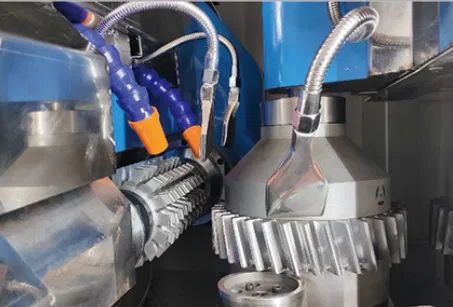
Recommended Process Parameters for Plastic Gear Hobbing
| Material | Hob Type | Cutting Speed | Coolant |
|---|---|---|---|
| POM (Acetal) | HSS, uncoated or TiN | 150–300 m/min | Air blast preferred |
| Nylon (PA) | HSS, uncoated or TiCN | 100–200 m/min | Air or water mist |
| PEEK | PM-HSS or carbide | 100–150 m/min | Air blast or dry |
| PTFE composite | Sharp HSS, PCD (ideal) | 200–400 m/min | Dry preferred |
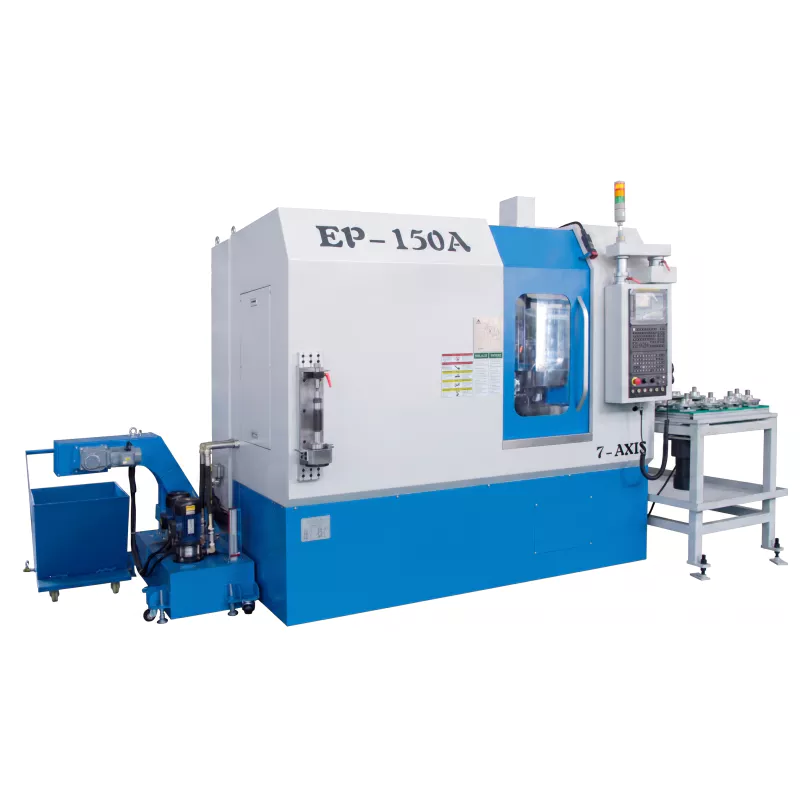
Our CNC Hobbing Machine for Plastic Gear Production
Our CNC Hobbing Machine can be configured for plastic and non-metallic gear production with appropriate spindle speed ranges, chip management systems, and workholding solutions for lightweight materials.
👉 Discuss Plastic Gear Hobbing Requirements →