From Spur Gears to Worm Gears: What Can a CNC Hobbing Machine Cut?
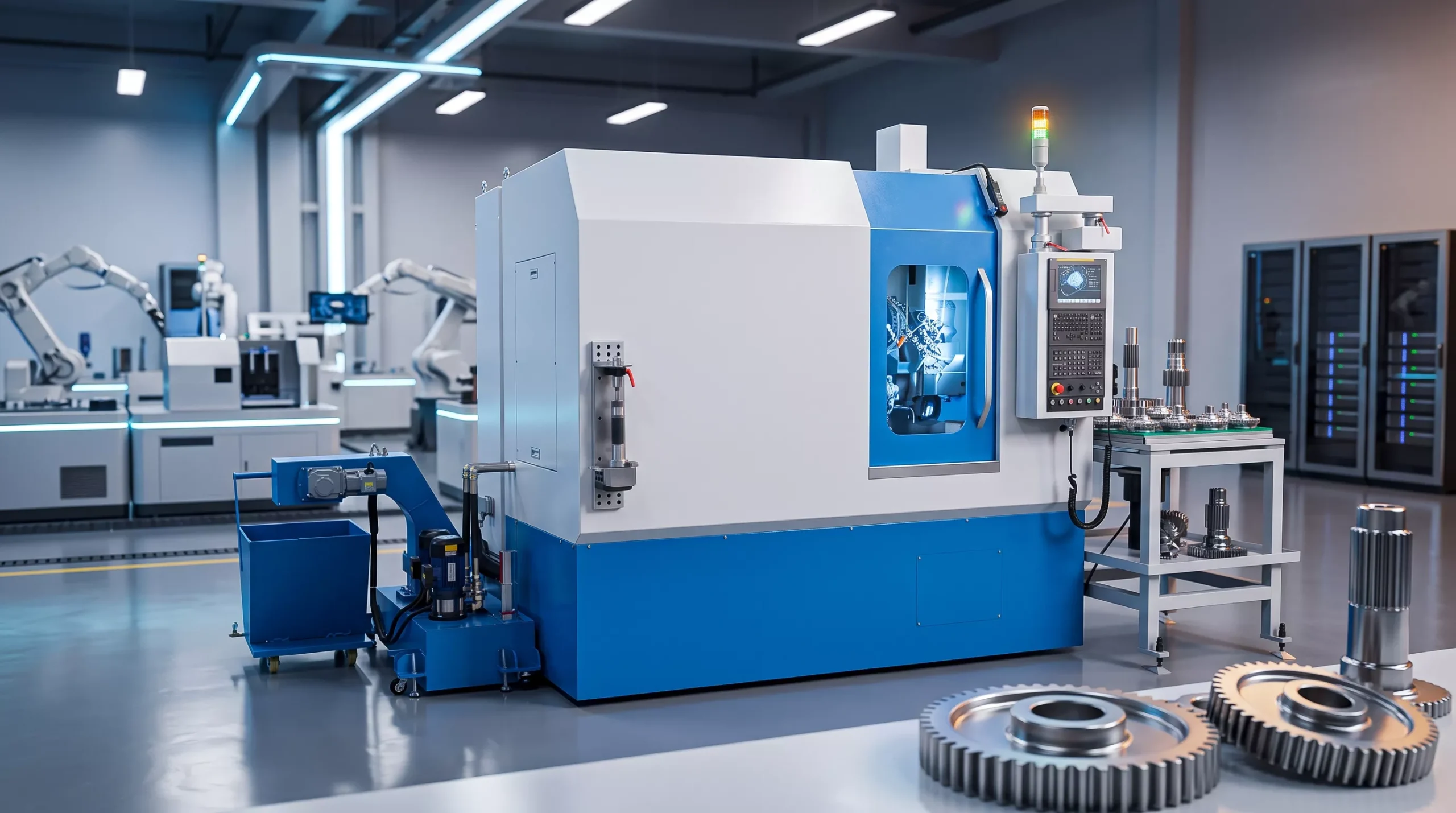
One of the most significant advantages of the hobbing process is its versatility. A single CNC hobbing machine — equipped with appropriate hobs and programmed with the correct parameters — can produce a remarkably diverse range of gear types, from the simplest spur gear to complex worm wheels and involute splines. This versatility makes hobbing the most widely used gear-generating process in the world.
This guide systematically covers every major gear type that CNC hobbing machines can produce, including the specific process considerations, hob requirements, and machine parameters for each.
1. Spur Gears
⚙ Spur Gear Hobbing — Process Details
Description: Straight-tooth gears with teeth parallel to the gear axis. The most common gear type in mechanical power transmission.
Hob type: Standard straight-flute or helical hob, module-matched to the gear.
Hob swivel angle: Equal to hob lead angle only (no gear helix angle component).
Axial feed: Continuous across the face width.
Typical accuracy: DIN 5–8 from hobbing; DIN 3–5 after grinding.
Applications: Industrial gearboxes, conveyors, pumps, agricultural machinery, general engineering.
2. Helical Gears
⚙ Helical Gear Hobbing — Process Details
Description: Gears with teeth cut at an angle to the gear axis. Smoother, quieter meshing than spur gears; dominant in automotive and high-speed applications.
Hob type: Same hob as for spur gears of equivalent module and pressure angle. The helix is generated by the machine motion, not the hob shape.
Hob swivel angle: Sum (or difference) of hob lead angle and gear helix angle.
Axial feed: Standard axial, with C-axis superimposed motion to generate helix.
Typical accuracy: DIN 5–8; higher with subsequent grinding.
Applications: Automotive transmissions, industrial gearboxes, machine tool drives, compressors.
3. Worm Gears (Worm Wheels)
⚙ Worm Wheel Hobbing — Process Details
Description: The driven gear in a worm gear pair. Has curved, helical teeth that mesh with the cylindrical worm thread. Provides high reduction ratios in a compact package.
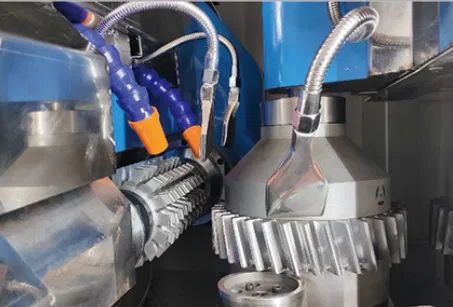
Hob type: Worm hob — a specialized hob that replicates the geometry of the mating worm. Must be precisely matched to the worm specification.
Infeed method: Radial infeed (hob approaches radially to full depth, then feeds tangentially) or tangential infeed (more precise; hob pre-set at depth, fed axially past the wheel).
Key challenge: Achieving correct tooth contact pattern across the worm face.
Applications: Lifting equipment, steering systems, packaging machinery, positioning systems, gate drives.
4. Involute Splines
⚙ Spline Hobbing — Process Details
Description: Involute splines are essentially fine-pitch gears used for torque transmission between shafts and hubs — not for motion reduction. Standardized to SAE, DIN, or ISO spline standards.
Hob type: Spline hob — a hob designed to cut splines to the specific standard (SAE J498, DIN 5480, ISO 4156).
Process: Very similar to spur gear hobbing; typically straight-sided or involute form.
Typical accuracy: Class 5–7 per relevant standard.
Applications: Automotive driveshafts, PTO shafts, tool holders, gearbox input shafts, pump and motor couplings.
5. Sprockets
⚙ Sprocket Hobbing — Process Details
Description: Sprockets for roller chain drives can be hobbed using a sprocket hob matched to the chain pitch (ANSI or ISO chain standard). Hobbing is efficient for medium-to-large sprockets; small sprockets are often stamped or milled.
Applications: Conveyor systems, motorcycles, bicycles, agricultural machinery, industrial chain drives.
6. Ratchet Gears
⚙ Ratchet Hobbing — Process Details
Description: Ratchet gears have asymmetric tooth profiles designed to engage in one direction and slip in the other. Special ratchet hobs are available for common configurations.
Applications: Hand tools, winches, indexing mechanisms, safety devices.
What CNC Hobbing Cannot Cut
Despite its versatility, hobbing has limitations. Gear types that typically require other processes include:
| Gear Type | Why Hobbing Cannot Be Used | Alternative Process |
|---|---|---|
| Internal gears | Hob cannot access internal tooth space | Gear shaping, broaching |
| Bevel gears | Conical geometry not compatible with hob | Gleason/Klingelnberg machines |
| Rack (long) | Machine travel limitations for long racks | Rack milling, rack shaping |
| Close-shoulder gears | Hob approach angle requires clearance | Gear shaping |
Our CNC Hobbing Machine: Versatile Gear Production
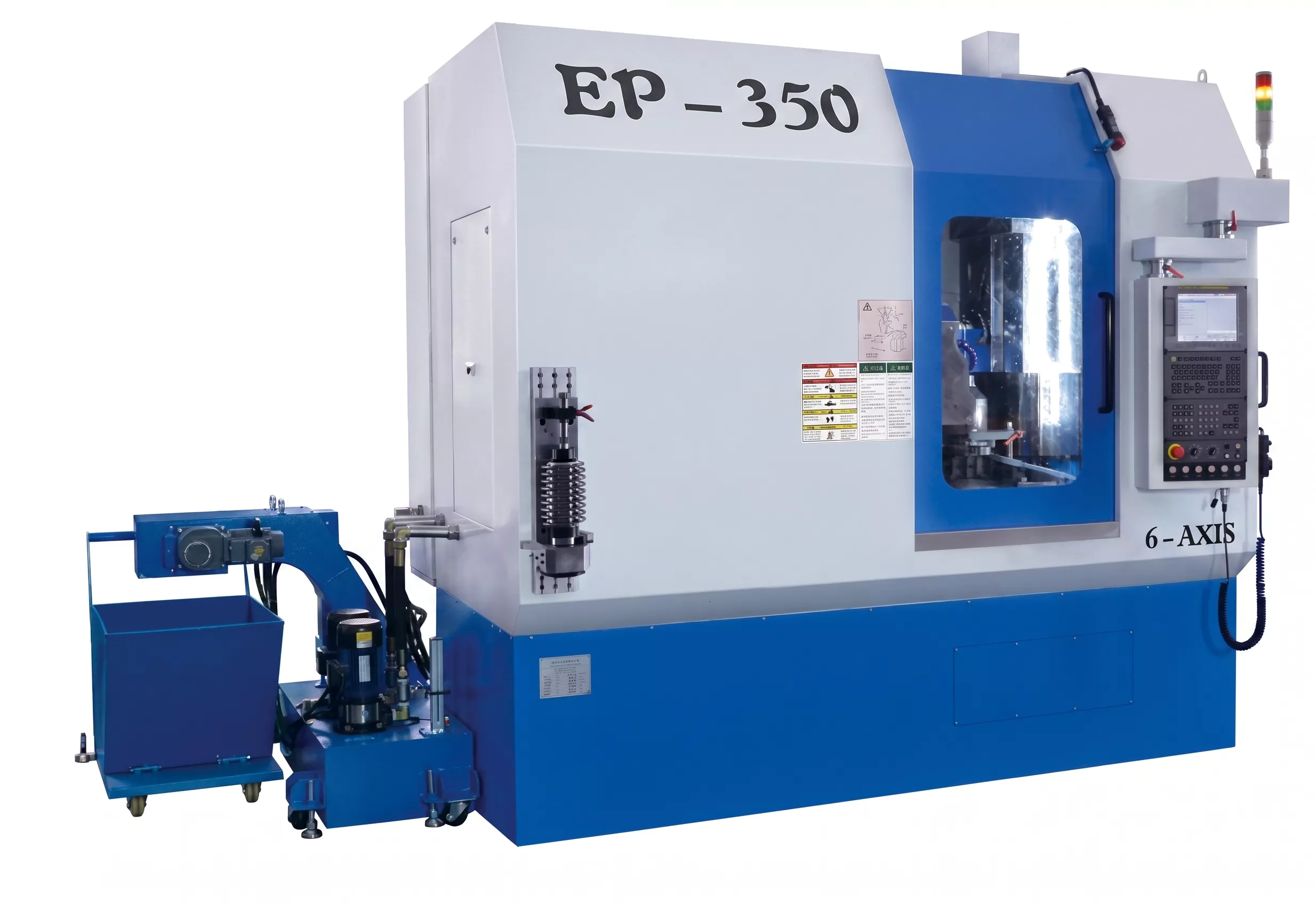
Our CNC Hobbing Machine is designed to handle the full range of gear types described in this guide — from spur and helical gears to worm wheels and involute splines. With broad module range compatibility and CNC-driven axis control, it adapts to your gear production requirements with minimum setup time.
👉 Explore Our CNC Hobbing Machine →
👉 Contact Us for Gear-Specific Consultation →