Dry Hobbing vs. Wet Hobbing on CNC Machines: Pros, Cons & When to Switch
The choice between dry hobbing and wet hobbing on a CNC gear hobbing machine is one of the most consequential process decisions in gear manufacturing. It affects cycle time, tooling cost, gear quality, environmental compliance, and total operating cost per piece. This guide provides a clear, balanced comparison of both strategies — including when each is the right choice and what it takes to switch between them.
What Is Wet Hobbing?
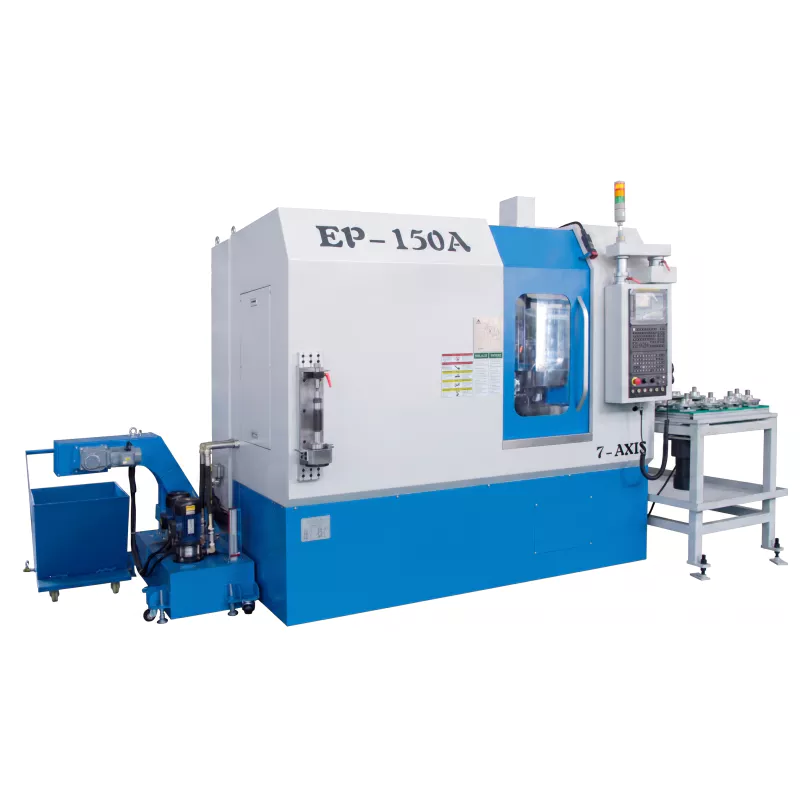
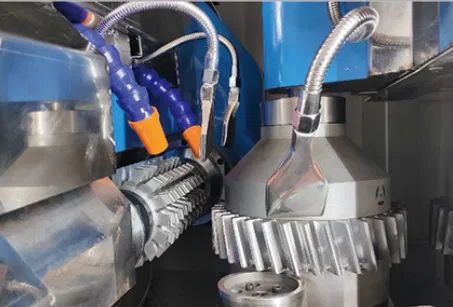
Wet hobbing uses flood coolant (water-based emulsion or cutting oil) applied to the cutting zone during the hobbing operation. The coolant serves three functions: cooling the hob and workpiece, lubricating the cutting interface, and flushing chips away from the cutting zone. Wet hobbing is the traditional approach and is still widely used, particularly for large-module gears and for HSS hob operations.
What Is Dry Hobbing?
Dry hobbing cuts without any liquid coolant, relying instead on coated carbide hobs at high cutting speeds to generate chips hot enough to carry most of the cutting heat away as they evacuate — rather than conducting heat into the hob or workpiece. Some dry hobbing operations use MQL (Minimum Quantity Lubrication) — a fine oil mist — to provide marginal lubrication without flood coolant.
Side-by-Side Comparison
| Factor | Wet Hobbing | Dry Hobbing |
|---|---|---|
| Cutting speed | 50–150 m/min (HSS) | 200–500 m/min (carbide) |
| Hob material | HSS or PM-HSS | Solid carbide (essential) |
| Hob cost | Lower per hob | Higher per hob |
| Hob life (parts/hob) | Lower | Higher |
| Tooling cost per part | Medium | Lower (typically) |
| Coolant cost | Significant (purchase + disposal) | Zero or minimal (MQL only) |
| Cycle time | Longer | Shorter (2–4× faster) |
| Machine complexity | Coolant system required | Requires thermal management |
| Environmental impact | Coolant disposal regulations | Near-zero liquid waste |
| Chip handling | Wet/oily chips; complex handling | Clean, dry chips; easy recycle |
| Best module range | All modules (essential >m8) | Best for m1–m6 |
When to Use Wet Hobbing
💧 Use Wet Hobbing When…
- Module > 8: Carbide hobs in large modules are expensive and fragile; HSS wet hobbing is more practical and economical
- Interrupted cuts (keyways, holes in gear blank): HSS hobs are tougher and less prone to chipping at interrupted cuts
- Materials difficult for dry hobbing: stainless steel, titanium, and some superalloys run better with coolant
- Existing machine has no dry hobbing thermal management: converting an older wet machine to dry without modification creates accuracy and reliability problems
- Low-to-medium production volumes: the tooling cost advantage of dry hobbing is larger at high volumes
When to Use Dry Hobbing
☀ Use Dry Hobbing When…
- High-volume production (>50,000 gears/year per machine): cycle time reduction and tooling cost savings justify the carbide hob investment
- Module ≤ 6: carbide hob cost is more manageable; speed advantages are most pronounced at small modules
- Automotive and industrial gear production: dry hobbing is the dominant strategy in these sectors worldwide
- Environmental / regulatory pressure: eliminating coolant simplifies waste management and environmental compliance
- Inline automation: dry chips are easier to handle in automated production cells than wet/oily chips
What Does It Take to Switch From Wet to Dry?
- ● Machine capability: The machine must be designed or upgraded for thermal management in dry operation. Not all wet hobbing machines can simply run dry without accuracy or reliability problems.
- ● Tooling investment: Conversion to dry requires purchasing solid carbide hobs — a significant upfront tooling investment.
- ● Chip handling: Remove or bypass the coolant chip conveyor; install a dry chip conveyor or collection system.
- ● Process optimization: Dry hobbing parameters (speed, feed, shift strategy) are different from wet; the process must be re-optimized for the new cutting conditions.
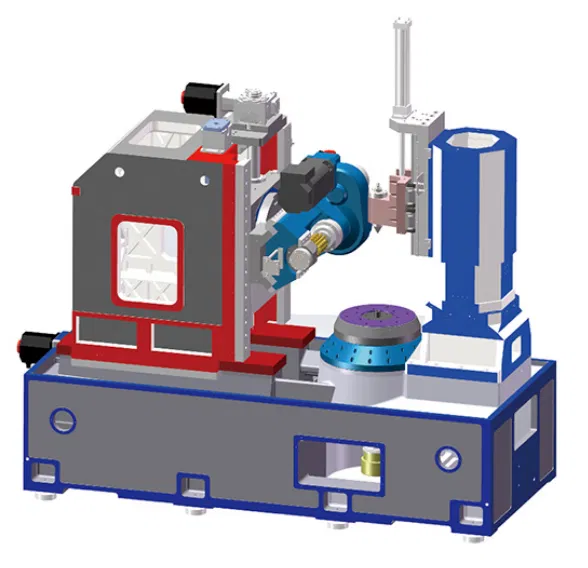
Our CNC Hobbing Machine — Available for Both Wet and Dry Operation
Our CNC Hobbing Machine is available in wet, dry, and MQL configurations. Whether your production calls for the flexibility of wet hobbing or the cycle time advantages of high-speed dry hobbing, we have the right machine configuration for your requirements.
👉 View Dry and Wet Hobbing Machine Options →
👉 Ask Our Team Which Strategy Is Right for You →