Common CNC Hobbing Machine Problems and How to Troubleshoot Them
Even the best-maintained CNC hobbing machine will occasionally encounter problems — whether it’s a gear quality deviation, unexpected tool wear, or a machine alarm that halts production. Knowing how to identify root causes quickly and apply effective corrective actions is a critical skill for any gear production team. This guide covers the most common CNC hobbing machine problems, their likely causes, and practical troubleshooting steps.
Problem Category 1: Gear Quality Deviations
🔍 Pitch Error (Tooth Spacing Error)
Symptoms: Individual pitch deviation (fp) or total cumulative pitch error (Fp) exceeds tolerance.
Likely causes:
- Workpiece arbor runout — check and correct arbor concentricity (should be <3 µm TIR)
- Hob spindle bearing wear — check hob spindle runout
- Workpiece spindle encoder fault — check C-axis encoder and cable
- Electronic gearing ratio error — verify programmed ratio matches gear specification
- Clamping distortion — excessive clamping force on thin-web gears distorts the blank during cutting
Corrective action: Start with arbor runout check (most common cause). Progress to spindle diagnostics if arbor is confirmed good.
🔍 Profile Error (Involute Form Error)
Symptoms: Profile deviation (Fα or fα) outside tolerance. Gear teeth are not generating the correct involute form.
Likely causes:
- Worn or damaged hob — check hob condition; inspect for chipped or worn teeth
- Incorrect hob specification — verify hob module, pressure angle, and number of starts match the gear specification
- Incorrect hob swivel angle (A-axis) — recalculate and verify the programmed swivel angle
- X-axis positioning error — verify radial positioning accuracy with a dial indicator
🔍 Helix Error (Lead Error)
Symptoms: Helix deviation (Fβ or fβ) outside tolerance. The gear teeth do not follow the correct helical path along the face width.
Likely causes:
- Z-axis guideway wear or contamination — clean and check Z-axis linear guide straightness
- Incorrect helix angle in program — verify programmed helix angle against gear drawing
- Workpiece taper (blank dimensional error) — verify blank face parallelism before hobbing
- Tailstock alignment (horizontal machines) — check tailstock center alignment to workpiece spindle axis
🔍 Excessive Runout (Eccentricity)
Symptoms: Gear runout (Fr) exceeds tolerance; gears show periodic variation in tooth thickness or pitch that repeats once per gear revolution.
Likely causes:
- Contaminated or damaged arbor bore — clean all mating surfaces before mounting
- Worn workpiece spindle bearings — check spindle run-out directly
- Blank bore out of tolerance — verify blank bore diameter and roundness before mounting
Problem Category 2: Surface Finish Issues
🔍 Poor Surface Finish (High Ra)
Likely causes and fixes:
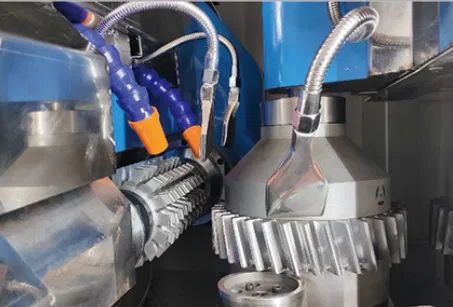
- Feed rate too high — reduce axial feed; each hob tooth cut appears as a facet on the tooth surface; finer feed = smoother surface
- Hob wear — worn hob teeth produce rough, torn surfaces; check hob condition and shift or replace
- Vibration (chatter) — check workpiece and hob clamping rigidity; reduce cutting speed or feed to move away from resonant frequency
- Insufficient coolant (wet hobbing) — verify coolant flow rate and direction; ensure coolant reaches the cutting zone effectively
Problem Category 3: Tool Life Problems
⚙ Premature Hob Wear or Chipping
Likely causes:
- Cutting speed too high — reduce cutting speed by 10–15% and monitor
- Interrupted cut — keyways, holes, or other interruptions in the blank shock-load the hob; reduce feed at these points
- Hard spots in the workpiece material — verify incoming material hardness; use material with controlled hardenability
- No or incorrect hob shift — verify hob shift strategy is active and set to the correct amount
- Insufficient or wrong coolant (wet hobbing) — verify coolant concentration and temperature
Problem Category 4: Machine Alarms and Mechanical Issues
⚠ Servo Drive Overload Alarm
Usually caused by excessive cutting forces — check cutting parameters (reduce feed or speed), check for hob clogging (chips wedged in flutes), or verify workpiece material hardness. If the alarm occurs at approach, check for incorrect depth of cut in the program.
⚠ Spindle Vibration / Noise
Check hob arbor runout and balance. An unbalanced hob assembly causes vibration proportional to speed squared — significant at high RPM. Verify hob arbor nut is properly torqued. Check hob spindle bearing condition (vibration analysis recommended if bearings are suspect).
⚠ Axis Positioning Alarm
Check encoder cable and connector for damage or contamination. Check for chip fouling on linear scale (clean with compressed air). Verify servo drive parameters. If the alarm is temperature-related (occurs after warm-up), suspect thermal expansion — check thermal compensation settings.
Preventive Maintenance: The Best Troubleshooting Is No Troubleshooting
| Interval | Maintenance Task |
|---|---|
| Daily | Clean machine bed, check coolant level, inspect hob condition, check lubrication oil level |
| Weekly | Check guideway lubrication, inspect chip conveyor, clean coolant tank filters, check axis backlash |
| Monthly | Verify workpiece and hob spindle runout, check axis positioning accuracy, clean electrical cabinet filters |
| Annually | Full geometric accuracy check per machine standard, spindle bearing vibration analysis, servo drive parameter verification |
Our CNC Hobbing Machine — Built for Reliable Production
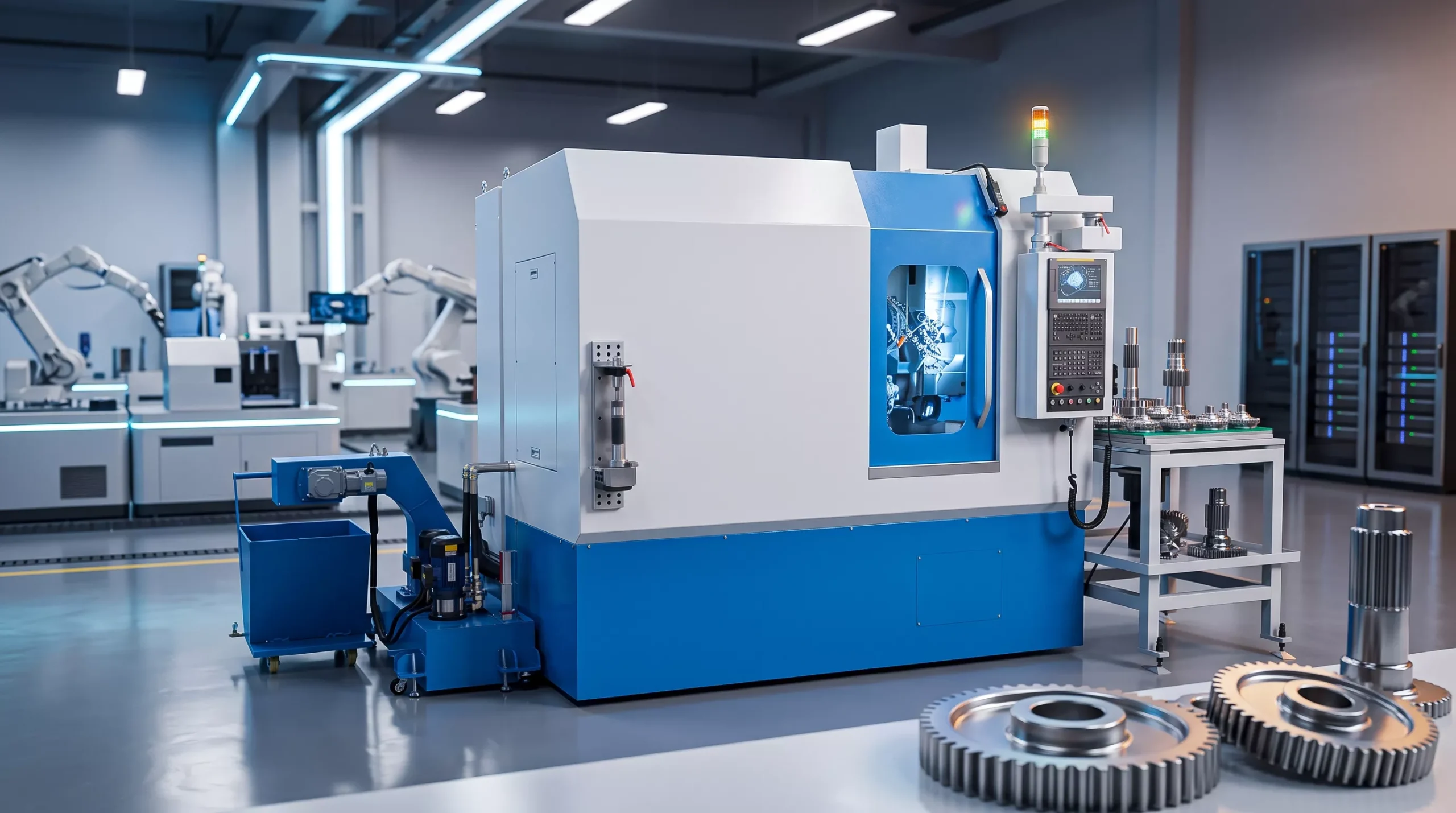
Our CNC Hobbing Machine is designed with serviceability in mind — accessible service points, comprehensive alarm diagnostics, and remote service capability. Our technical support team can assist with troubleshooting, spare parts, and preventive maintenance planning.
👉 Contact Our Technical Support Team →