CNC Hobbing vs. Gear Grinding: Which Process Delivers Better Precision?
One of the most common questions gear manufacturers face is: when should you use CNC hobbing, and when do you need gear grinding? The answer depends on required accuracy class, material hardness, surface finish, production volume, and total cost per piece. This guide compares both processes in depth so you can make the right process selection for your gear application.
Process Overview
⚙ CNC Hobbing
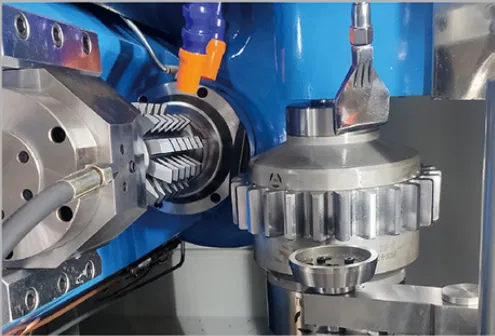
A soft machining process (pre-heat treatment) that generates gear teeth by synchronized rotation of a multi-tooth hob and the workpiece. Fast, economical, and suitable for a wide range of gear types. Typically achieves DIN 5–8 accuracy.
🔍 Gear Grinding
A hard finishing process (post-heat treatment) that uses abrasive grinding wheels to remove heat treatment distortion and achieve tight tolerances. Achieves DIN 3–5 (and finer). Slower and more expensive per piece than hobbing.
Head-to-Head Comparison
| Parameter | CNC Hobbing | Gear Grinding |
|---|---|---|
| Workpiece hardness | Soft (unhardened, up to ~35 HRC) | Hard (case-hardened, up to 65 HRC) |
| Accuracy class | DIN 5–8 (typical) | DIN 3–5 (typical) |
| Surface finish (Ra) | 0.8–3.2 µm | 0.2–0.8 µm |
| Cycle time | Fast (seconds to minutes) | Slower (minutes to hours) |
| Tooling cost | Low–medium (hob) | Medium–high (grinding wheel) |
| Machine cost | Medium | High |
| Gear types | External: spur, helical, worm, spline | External spur & helical (mainly) |
| Position in production flow | Before heat treatment | After heat treatment |
| Material removal rate | High | Low |
When CNC Hobbing Is the Right Choice
📈 DIN 5–8 Accuracy Is Sufficient
For general industrial gearboxes, agricultural machinery, pumps, and conveyor systems, DIN 6–8 gears are perfectly adequate. Hobbing alone (without subsequent grinding) delivers these tolerances economically at high volume.
🚗 High-Volume Production
In automotive transmission lines where millions of gears are produced annually, the speed advantage of hobbing (cycle times of a few seconds per gear in optimized dry hobbing) makes it the only economically viable primary cutting method.
🔧 Worm Gears and Splines
Gear grinding is not commonly applied to worm wheels and involute splines. Hobbing is often the final machining operation for these gear types, even in precision applications.
When Gear Grinding Is Required
✈ DIN 3–5 Accuracy and Better
Aerospace, medical, precision instruments, and high-end automotive applications require gear accuracy classes that hobbing alone cannot achieve, especially after heat treatment distortion.
🔍 Post-Heat Treatment Finishing
Case-hardened gears at 60+ HRC can only be finished by grinding or hard skiving. Grinding removes the distortion introduced by carburizing and quenching, restoring the hobbed tooth form to its designed tolerance.
The Optimal Strategy: Hobbing + Grinding
For the highest-precision hardened gears, the best strategy combines both processes:
- CNC Hobbing — generates the tooth form quickly and economically in the soft state, leaving adequate stock for grinding (typically 0.15–0.3 mm per flank).
- Chamfering / Deburring — removes burrs before heat treatment.
- Heat Treatment — case-hardening, nitriding, or induction hardening.
- Gear Grinding — removes distortion, achieves final accuracy class and surface finish.
This two-stage approach delivers the best quality at the lowest total production cost — leveraging hobbing’s productivity advantage and grinding’s precision capability.
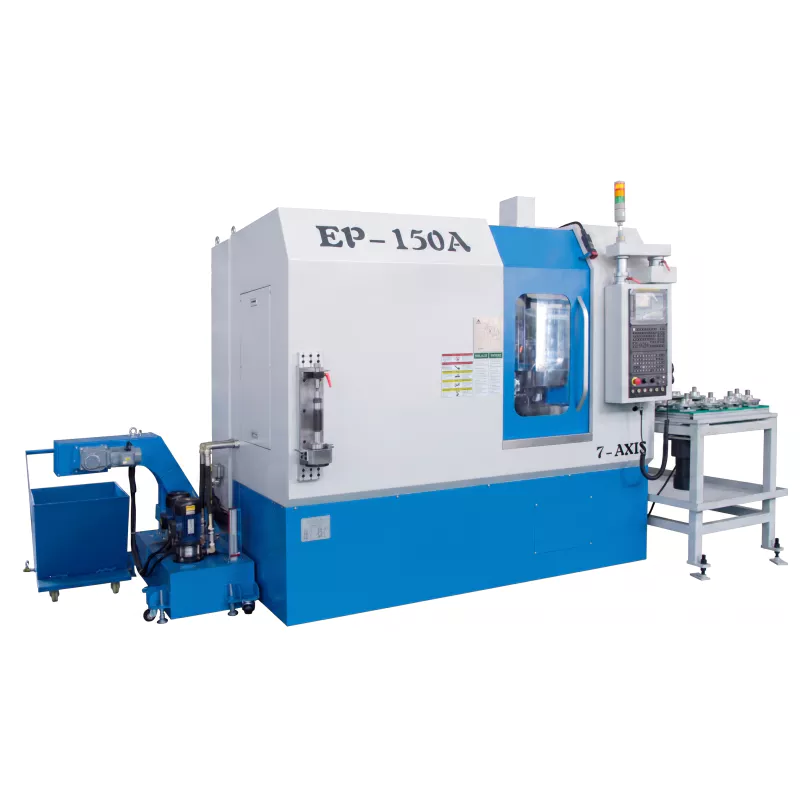
Our CNC Hobbing Machine
Our CNC Hobbing Machine is designed to serve as the high-efficiency primary gear-cutting stage in your production process, whether your downstream route is direct use, shaving, or gear grinding. Precision workpiece spindle, automatic hob shift, and optimized axis geometry ensure your gears arrive at the next operation with the best possible pre-ground quality.
👉 Discuss Your Process With Our Engineers →