CNC Hobbing Machines for Automotive Gear Production: What You Need to Know
The automotive industry is one of the largest consumers of precision gears in the world. A single passenger car transmission contains dozens of gears; an electric vehicle drivetrain requires ultra-precision gear sets to deliver the near-silent operation consumers expect. CNC hobbing machines are the workhorses of automotive gear production — responsible for cutting the majority of automotive gears at the scale, speed, and consistency the industry demands.
If you supply gears to automotive OEMs or Tier 1 suppliers, or if you are planning an automotive gear production line, this guide covers the specific requirements, machine specifications, and process considerations that matter most.
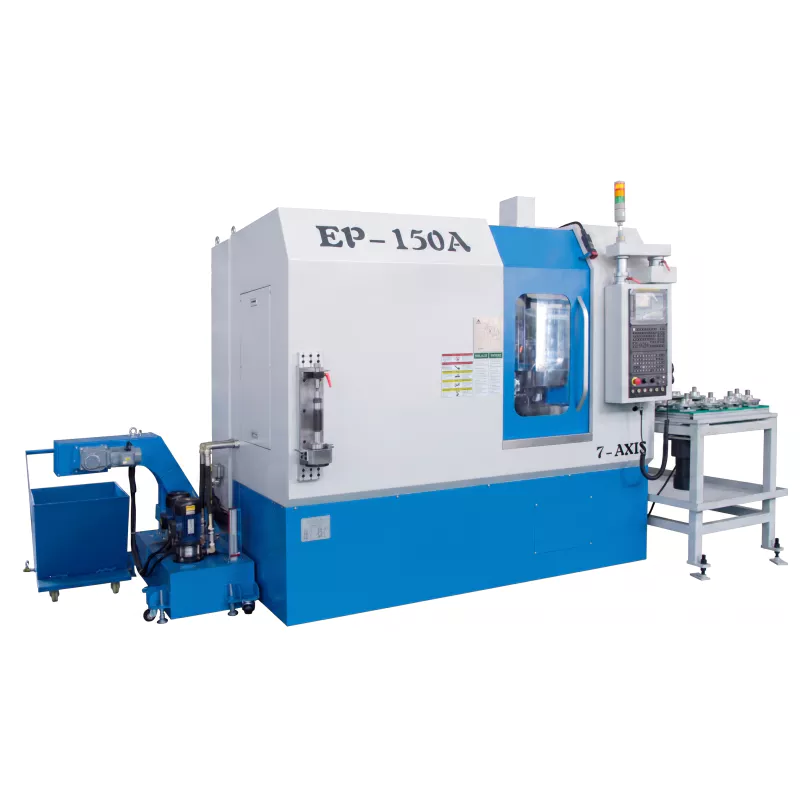
The Scale of Automotive Gear Production
To understand why automotive gear hobbing is its own discipline, consider the volumes involved:
~70–100
Gears per typical automatic transmission
Millions
Identical gears needed per model year for a single transmission design
Seconds
Target cycle time per gear in optimized dry hobbing production
DIN 5–7
Typical hobbed accuracy class for automotive gears (before grinding)
Key Requirements for Automotive CNC Hobbing
⚡ High Cutting Speed (Dry Hobbing)
Modern automotive hobbing runs predominantly dry, using coated carbide hobs at cutting speeds of 200–500 m/min. This eliminates coolant cost and disposal while enabling the shortest possible cycle times. The machine must be designed for thermal management in the absence of flood coolant — typically using a heavily ribbed cast structure and optimized chip evacuation.
🤖 Full Automation Compatibility
Automotive hobbing lines run 24/7, often lights-out. The CNC hobbing machine must integrate seamlessly with gantry robots or conveyor loaders, automatic deburring/chamfering units, and downstream washing and inspection systems. Standardized part interfaces, palletized workholding, and PROFIBUS/EtherCAT industrial networking are typically required.
📈 Statistical Process Control (SPC) Integration
Automotive quality management systems (IATF 16949, APQP, PPAP) require continuous process monitoring. The CNC system must be able to output spindle load, axis position, and cycle time data to SPC systems in real time, enabling early detection of tool wear or machine drift before out-of-tolerance gears are produced.
🔧 Short Changeover Time
Automotive gear production often involves mixed-model lines where multiple gear types run on the same machine. CNC program recall, quick-change hob arbors, and standardized workholding reduce changeover time from hours (on mechanical machines) to under 15–30 minutes on a modern CNC hobber.
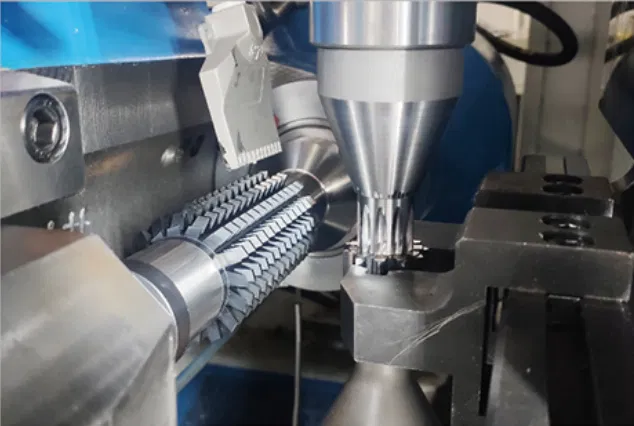
Automotive Gear Types Produced by CNC Hobbing
| Gear Type | Application | Typical Module | Post-Hob Process |
|---|---|---|---|
| Helical spur gear | Transmission ratio gears | 1.5–3 | Heat treatment + grinding |
| Involute spline | Shaft couplings, synchronizers | 0.5–1.5 | Heat treatment (no grind) |
| Ring gear (external) | Differential, planetary systems | 2–4 | Heat treatment + grinding |
| Park gear | Automatic transmission parking lock | 3–5 | Heat treatment (no grind) |
| EV reduction gear | Single-speed EV drivetrain | 1.5–3 | Heat treatment + fine grinding |
The EV Revolution and CNC Hobbing
Electric vehicles place new demands on gear manufacturers. Because EV drivetrains lack the masking noise of a combustion engine, gear noise becomes directly perceptible to occupants. This drives requirements for:
- ● Tighter gear accuracy (DIN 4–5 after hobbing + grinding)
- ● Crowned tooth forms to reduce edge contact stresses
- ● Improved surface finish to reduce mesh excitation
- ● 100% gear noise testing (transmission error measurement)
5-axis and 6-axis CNC hobbing machines are increasingly specified for EV gear production because they can produce crowned gear blanks with pre-programmed flank modifications — reducing the correction work required in subsequent grinding.
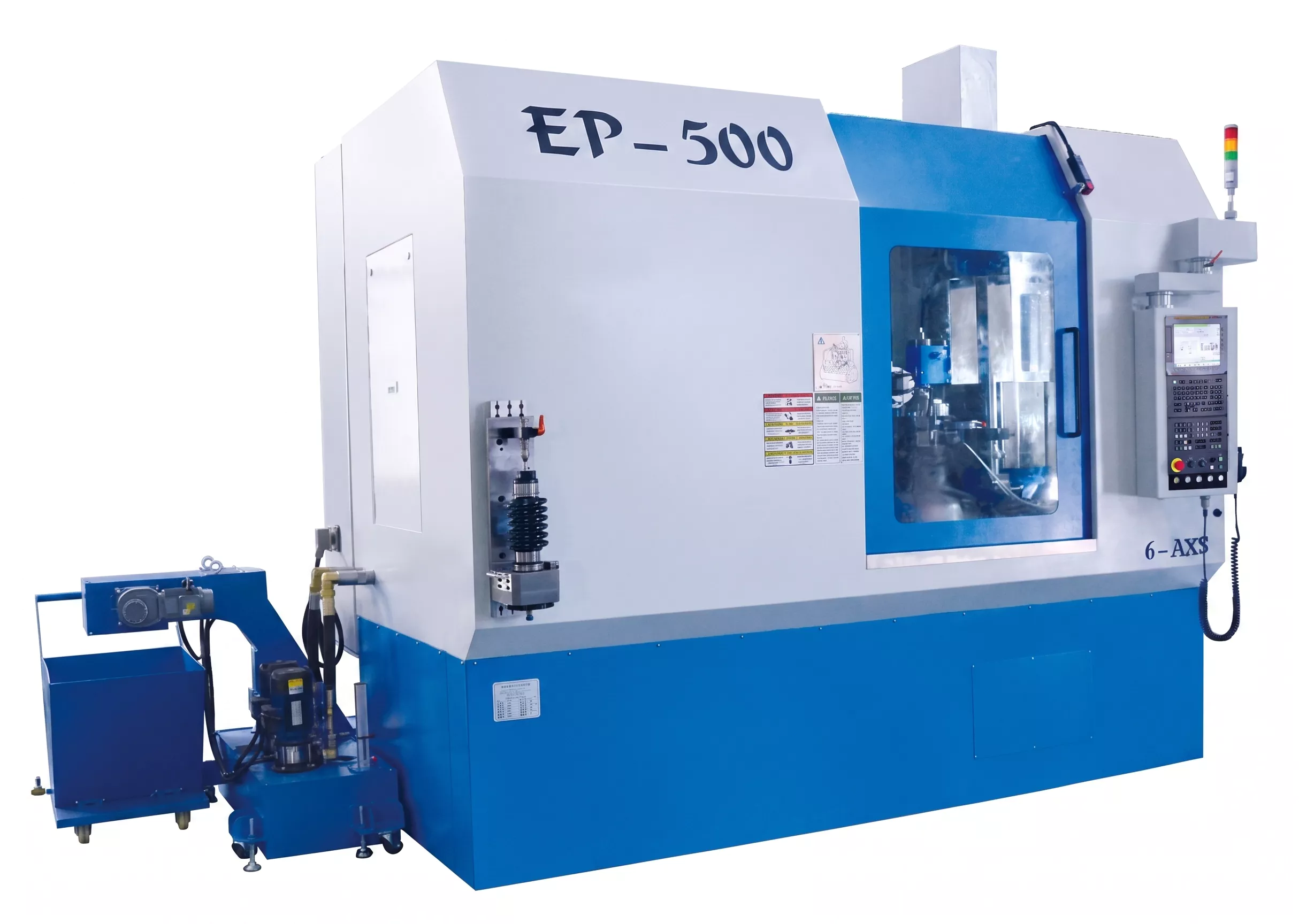
Our CNC Hobbing Machine for Automotive Applications
Our CNC Hobbing Machine is engineered to meet the demanding requirements of automotive gear production — from high-speed dry hobbing capability to full automation integration and SPC data output. It is the reliable foundation for a high-volume, high-precision automotive gear production line.
👉 View Automotive CNC Hobbing Machine →
👉 Discuss Your Automotive Gear Line Requirements →