CNC Hobbing Hardened Steel Gears: Challenges, Solutions & Tool Recommendations
Hobbing hardened steel gears presents unique challenges that don’t exist in conventional soft-machining applications. As manufacturers push to reduce the number of operations in gear production — or as specific gear applications call for hobbing materials that are already partially hardened — understanding how to successfully hob hardened and difficult-to-machine steels on a CNC hobbing machine becomes critical knowledge.
This guide covers the specific challenges of hobbing hardened and high-hardness steels, and provides practical tool recommendations and process strategies to overcome them.
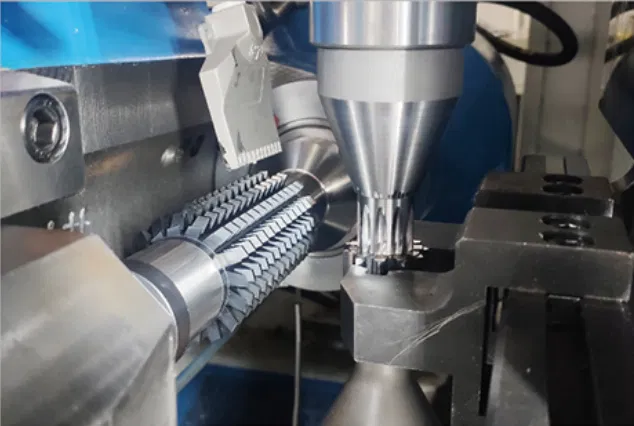
What Counts as “Hardened” for Hobbing Purposes?
In gear manufacturing, “hardened steel” for hobbing typically refers to materials in the range of 35–50 HRC. This includes:
- ● Pre-hardened die steels (P20, H13, D2 at ~30–50 HRC)
- ● Through-hardened alloy steels (4140, 4340 at 30–45 HRC)
- ● Induction-hardened surfaces on normalized core (case hardness 50–60 HRC)
- ● Nitrided steels (surface hardness 60–70 HRC, thin case)
Fully case-hardened gears (60–65 HRC) are typically too hard for productive hobbing and require gear grinding instead. The hobbing window is materials up to approximately 45–50 HRC, depending on module, gear size, and available tooling.
Key Challenges in Hobbing Hardened Steels
High Cutting Forces
Hardened steel requires substantially higher cutting forces than soft steel. This increases the risk of hob deflection, chatter, and rapid wear. Machine rigidity and reduced feeds are essential.
Rapid Tool Wear
Hard materials are abrasive and generate high temperatures at the cutting edge. Standard HSS hobs wear rapidly in hardened steel; only PM-HSS or carbide hobs with high-performance coatings can maintain acceptable wear rates.
Chipping Risk
Hard, brittle chips and inconsistent hardness (from heat treatment variability) can cause shock loading on the hob tooth — chipping carbide or PM-HSS hobs. Reduced feed and cutting speed mitigate this risk.
Heat Generation
Hard materials generate more heat per unit of material removed. In dry hobbing, this can heat the workpiece sufficiently to affect dimensional stability and introduce thermal distortion in the gear blank.
Tool Recommendations for Hardened Steel Hobbing
| Material / Hardness | Recommended Hob Substrate | Recommended Coating | Speed Guideline |
|---|---|---|---|
| Alloy steel 30–40 HRC | PM-HSS | TiAlN | 60–100 m/min (wet) |
| Alloy steel 40–50 HRC | Solid carbide | AlTiN or TiSiN | 80–120 m/min (wet/MQL) |
| Nitrided surface (~65 HRC, thin) | Solid carbide | AlCrN or TiSiN | 60–100 m/min |
| Stainless steel (work-hardening) | PM-HSS or carbide | AlTiN | 40–80 m/min (wet) |
Process Parameters for Hardened Steel Hobbing
⚙ Reduce Axial Feed
Reducing axial feed by 30–50% compared to soft-steel parameters reduces the chip load per tooth and lowers cutting forces and temperatures. This is the most effective single parameter change for improving tool life in hardened materials.
⚙ Use Climb Hobbing
Climb (down) hobbing is preferred for hardened materials because chip thickness decreases through the cut (rather than increasing as in conventional hobbing). This reduces the tendency for built-up edge and chipping on carbide hob teeth at the point of exit from the material.
⚙ Use Flood Coolant (Wet Hobbing)
For most hardened steel hobbing (except very thin case-hardened surfaces), wet hobbing with sulfurized cutting oil provides better lubrication and heat management than dry hobbing. The oil reduces friction at the cutting interface and conducts heat away before it damages the workpiece surface or hob coating.
⚙ Multiple Light Passes
For materials above 40 HRC, rough hobbing followed by a light finishing pass (taking only 0.05–0.1 mm additional stock) can improve gear quality while keeping individual cutting forces manageable. The finishing pass removes the work-hardened surface layer from the roughing pass.
Our CNC Hobbing Machine for Difficult Materials
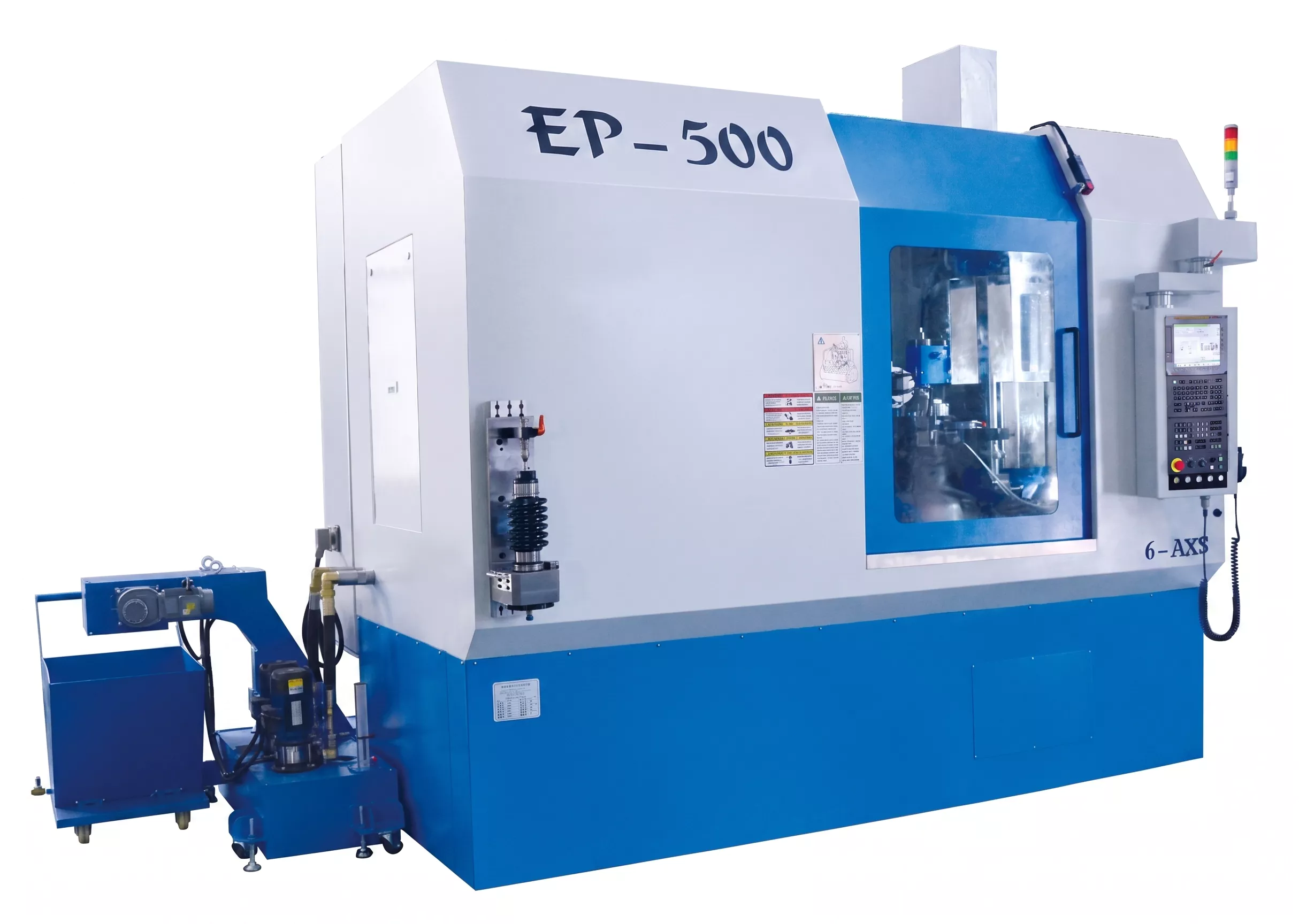
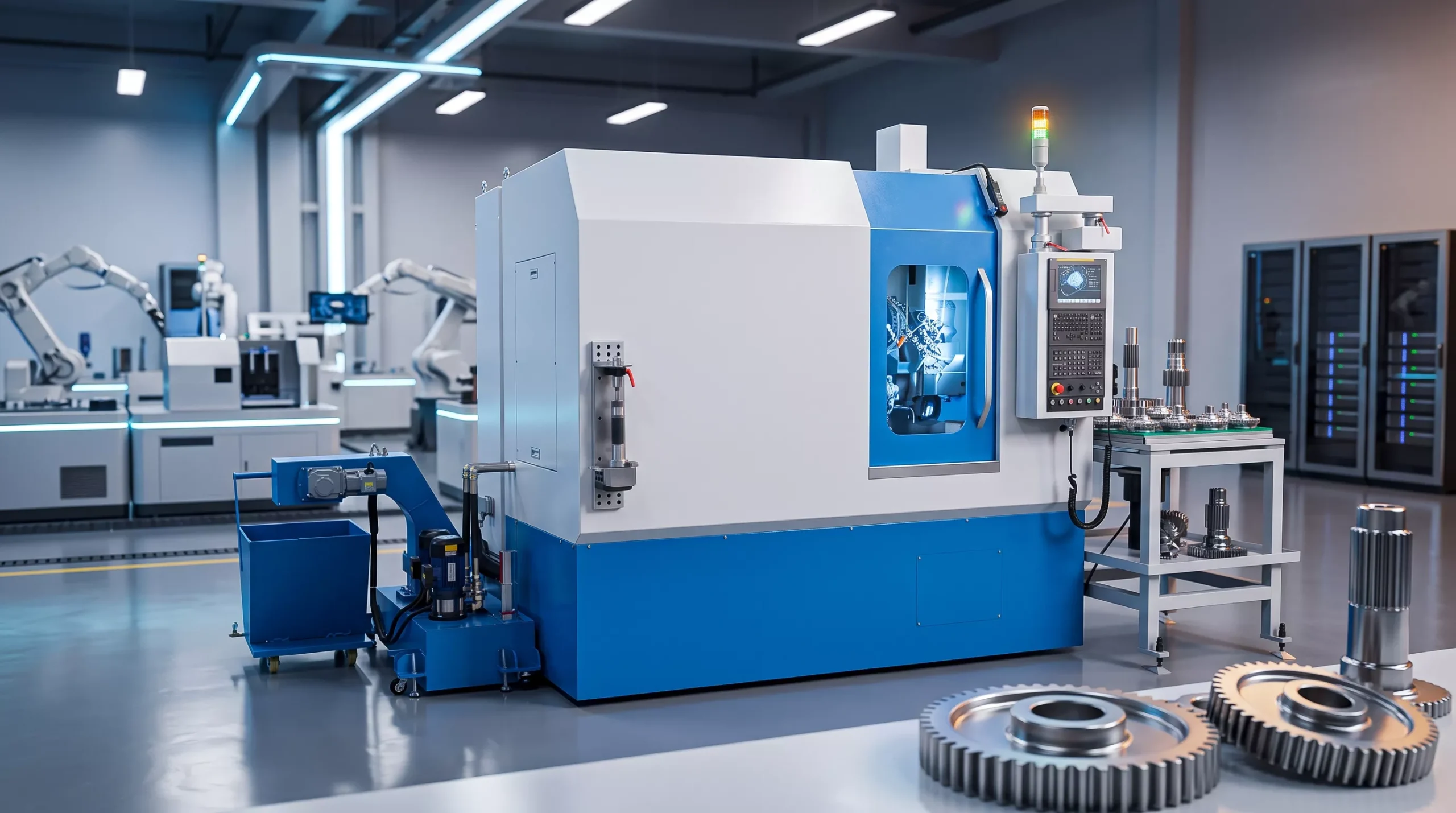
Our CNC Hobbing Machine is built with the rigidity and spindle power needed for hobbing hardened and difficult steels — with precise depth-of-cut control, high-torque spindles, and wet/MQL coolant systems compatible with demanding material applications.
👉 Get Tooling and Process Advice for Hardened Steel →