Achieving DIN Class 6 Gear Accuracy with CNC Hobbing: Process & Parameters
DIN Class 6 is a widely specified gear accuracy standard in industrial, automotive, and general engineering applications. Achieving consistent DIN 6 quality directly from a CNC hobbing machine — without subsequent gear grinding — requires careful process parameter selection, machine maintenance, and workholding setup. This technical guide explains exactly what DIN Class 6 requires, what process conditions are needed to achieve it reliably, and how to verify compliance.
What Is DIN Class 6?
DIN gear accuracy is specified in DIN 3961 / DIN 3962 / DIN 3963 (older standard) or the harmonized ISO 1328 standard. DIN Class numbers run from 1 (finest) to 12 (coarsest), with lower numbers denoting higher precision. DIN Class 6 is a medium-precision class suitable for:
- ● Industrial gearboxes for conveyor, pump, and compressor drives
- ● Agricultural machinery gearboxes
- ● General engineering machinery
- ● Pre-grind quality for gears that will subsequently be ground to DIN 4–5
DIN 6 is often considered the baseline for serious industrial gear production — anything coarser (DIN 7–9) suggests process or machine limitations, and anything finer (DIN 4–5) typically requires gear grinding after hobbing.
DIN Class 6 Tolerance Values (Example: Module 3, 40 Teeth)
| Parameter | Symbol | DIN 6 Tolerance (µm) | DIN 7 Tolerance (µm) |
|---|---|---|---|
| Single pitch error | fp | 10 | 16 |
| Total cumulative pitch error | Fp | 36 | 56 |
| Profile total deviation | Fα | 15 | 22 |
| Helix total deviation | Fβ | 16 | 25 |
| Radial runout | Fr | 32 | 50 |
Process Conditions Required for Consistent DIN Class 6
🔍 1. Machine Accuracy ≥ DIN 5 Capability
To consistently produce DIN 6 gears, the machine should be capable of DIN 5 in its own geometric accuracy test. The machine’s axis errors and spindle run-out contribute directly to gear error — there must be an adequate accuracy budget remaining for process variation (clamping, blank errors, tool wear).
🔍 2. Arbor Runout <3 µm TIR
Workpiece arbor runout is the leading cause of gear runout (Fr). To meet DIN 6 Fr tolerances, measure and correct arbor runout before starting production. High-precision collet or hydraulic expansion arbors achieve ≤2 µm TIR consistently.
🔍 3. High-Quality Hob (PM-HSS or Carbide, AA Grade)
The hob must be of sufficient quality to generate DIN 6 gears. An AA-grade hob (manufactured to DIN 3968 Class AA) has tolerances tight enough to produce DIN 6 gears when properly used. Regular hob condition inspection and shift strategy are essential to maintain quality throughout tool life.
🔍 4. Optimized Axial Feed
For DIN 6 profile accuracy, the axial feed must be set below the theoretical limit where feed marks on the tooth flank become detectable in the profile measurement. Typical DIN 6 axial feeds: 1.5–3 mm/rev for module 3–6 gears; finer for smaller modules and coarser for larger modules.
🔍 5. Gear Blank Quality Control
DIN 6 gear quality starts with the blank. Verify bore diameter tolerance, bore cylindricity, face runout, and OD runout before mounting on the arbor. A blank that is out of tolerance will produce a gear that is out of tolerance, regardless of machine and hob quality.
Verifying DIN Class 6: What to Measure
Gear accuracy verification is performed on a gear measuring center (gear CMM). For DIN 6 certification, the following parameters must be measured and reported:
- ● Single pitch deviation (fp) and total pitch deviation (Fp)
- ● Profile total deviation (Fα) and profile slope deviation (fHα)
- ● Helix total deviation (Fβ) and helix slope deviation (fHβ)
- ● Radial runout (Fr)
- ● Tooth thickness (measurement over balls / span measurement)
Our CNC Hobbing Machine — DIN 6 Capable
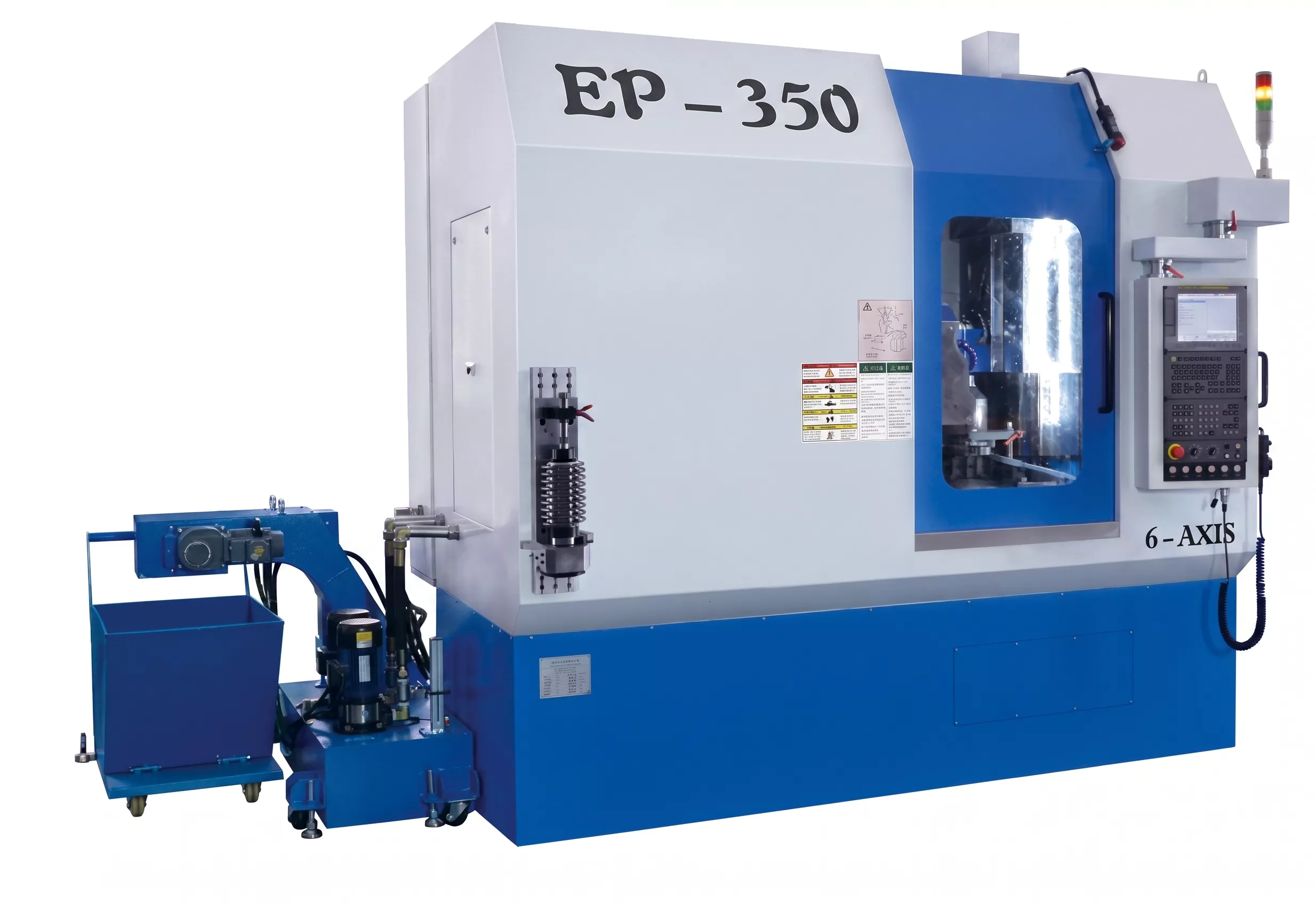
Our CNC Hobbing Machine is designed and verified to produce DIN Class 6 gears consistently in production. With precision workpiece and hob spindles, multi-axis servo control, and automatic hob shift, it provides the process stability needed for repeatable DIN 6 quality over long production runs.
👉 View DIN-Class CNC Hobbing Machine →
👉 Request Test Gear Inspection Reports →