5-Axis CNC Hobbing Machines: Pushing the Limits of Gear Manufacturing
The evolution of CNC hobbing technology has consistently moved toward more axes of controlled motion, enabling the production of gear geometries that were previously impossible or impractical. 5-axis and 6-axis CNC hobbing machines represent the current pinnacle of hobbing technology, delivering capabilities that push far beyond conventional 4-axis machines in terms of gear geometry, accuracy, and productivity.
This guide explains what the additional axes enable, which applications demand multi-axis hobbing, and how to determine if a 5-axis machine is right for your production.
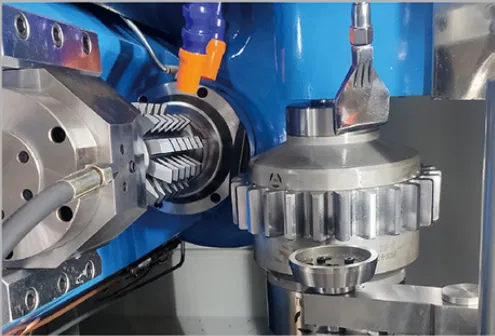
Understanding the Axes of a CNC Hobbing Machine
| Axis | Motion | Present on 4-Axis | Present on 5-Axis | Present on 6-Axis |
|---|---|---|---|---|
| B | Hob rotation | ✓ | ✓ | ✓ |
| C | Workpiece rotation | ✓ | ✓ | ✓ |
| X | Radial infeed | ✓ | ✓ | ✓ |
| Z | Axial feed | ✓ | ✓ | ✓ |
| A | Hob head swivel | ✓ | ✓ | ✓ |
| Y | Hob shift (tangential) | ✗ (manual) | ✓ (CNC-driven) | ✓ |
| Additional | Crowned tooth, diagonal feed | ✗ | ✗ | ✓ |
What the 5th Axis (Y-Axis) Enables
The 5th controlled axis on a CNC hobbing machine is typically the tangential hob shift (Y-axis). When CNC-driven rather than manually set, the Y-axis enables:
Automatic Hob Shift
The CNC shifts the hob by a programmed amount after each gear or after a defined number of cuts, distributing wear automatically without operator intervention. This extends hob life by 3–5× and ensures consistent gear quality throughout the tool’s life.
Diagonal Hobbing
Simultaneous axial (Z) and tangential (Y) motion during cutting — the hob traverses diagonally across the workpiece. This combines the benefits of hob shifting and axial feed in a single pass, improving surface finish and tool life simultaneously.
What the 6th Axis Enables
🔍 Crowned Tooth Forms
By superimposing a small X-axis motion (radial infeed) onto the axial Z-axis feed, the 6-axis hobber can produce crowned (barreled) gear teeth — teeth that are slightly thicker at the center of the face width and taper toward the edges. Crowned gears are more tolerant of misalignment and produce lower edge contact stresses, which is critical in automotive and aerospace transmissions.
🌐 Variable-Lead Worm Cutting
The 6th axis enables the pitch of worm threads to change along the worm axis — creating variable-lead worms used in anti-backlash mechanisms, differential mechanisms for precision instruments, and CNC machine tool lead screws.
⚙ Multi-Pass Flank Modification
Advanced CNC-driven motion superposition allows the machine to produce gears with programmed tip relief, root relief, and flank twist corrections — modifications that reduce noise and vibration in high-speed gear meshes without requiring a separate gear grinding operation.
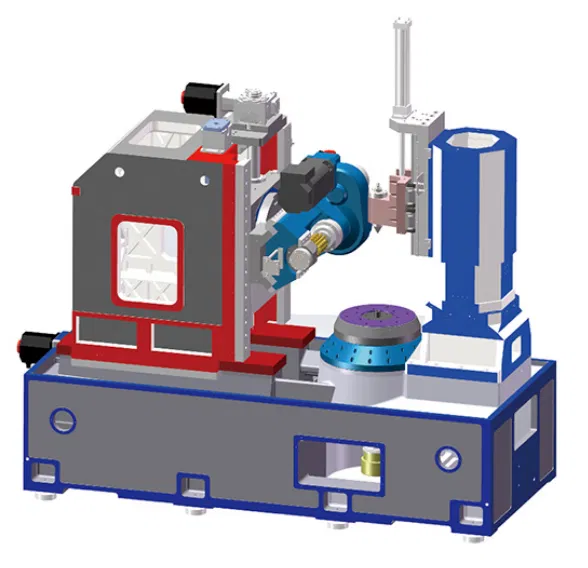
Applications That Demand 5-Axis or 6-Axis CNC Hobbing
- ● Electric vehicle gearboxes: Ultra-quiet, high-precision helical gears with crowned flanks and tight noise vibration harshness (NVH) requirements.
- ● Aerospace actuators: Low-noise, high-reliability gears with tight accuracy requirements and complex flank modifications.
- ● Precision instrument gears: Small-module gears requiring the best possible tooth form accuracy from hobbing alone.
- ● Wind turbine gearboxes: Large helical gears with crown modifications to handle shaft deflection under variable loads.
Our 6-Axis CNC Hobbing Machine
Our CNC Hobbing Machine is available in 5-axis and 6-axis configurations, enabling the full range of advanced gear geometries described in this guide. From automatic hob shift to diagonal hobbing and crowned tooth production, our machines deliver the precision and flexibility modern gear manufacturing demands.
👉 Explore Multi-Axis CNC Hobbing Machine →
👉 Request a Machine Configuration Consultation →